August this year brought abundant flowers, so many that one Sunday I brought four vases of them to church. This one contained four colors of Daylilies and Blue Sea Holly (looks a bit like thistles):
Yellow Heliopsis, red Echinacea, blue Delphinium and red/green leafy branches from a Ninebark bush:
All wildflowers from alongside the road: Pink Joe-Pye-Weed, yellow Goldenrod and Purple Loosestrife:
White Tree Hydrangeas, multicolored Sunflowers and pink and red Yarrow:
Meanwhile, the little hens were living comfortable lives in their coop inside the barn:
They all get along well together and I never see any fighting. They have no rooster, but I sometimes hear crowing coming from their coop. I looked it up and learned that sometimes, in the absence of a rooster, one hen will become more masculine and began crowing:
It was me, and I keep everybody on their toes!
Egg production is way down, which is fine with me. This day I had only two small eggs, one pink and one green. Soon, as we head toward winter, there will be none:
The white fantail pigeons in the adjoining room are multiplying at a fast clip:
This mother had a nest on the floor with a six day old baby:
A nest up on a shelf had two recently hatched babies. The parents are on them so much that I haven't been able to get another photo since this one:
Showing posts with label Purple Loosestrife. Show all posts
Monday, August 26, 2019
Friday, August 24, 2018
Wildflower Fence Walks
I took two walks one day along the fence line, once for enjoyment and once to repair the fence. I was amazed both times at the spectacular displays of wildflowers I saw. This wild collection for instance was Queen Anne's Lace, Red Clover, Black-Eyed Susan and Goldenrod:
Just a few steps farther and I saw Common Boneset (more on this later in this post), Purple Loosestrife and Goldenrod:
But what on earth were these tiny, daisy-like flowers? I took a number of photos to look them up back in the house:
I looked them up and decided that they were probably Tradescant's Aster, a new plant for me. I later found a picture of Prairie Fleabane and thought that it might be that also. Whatever it was, it was interesting:
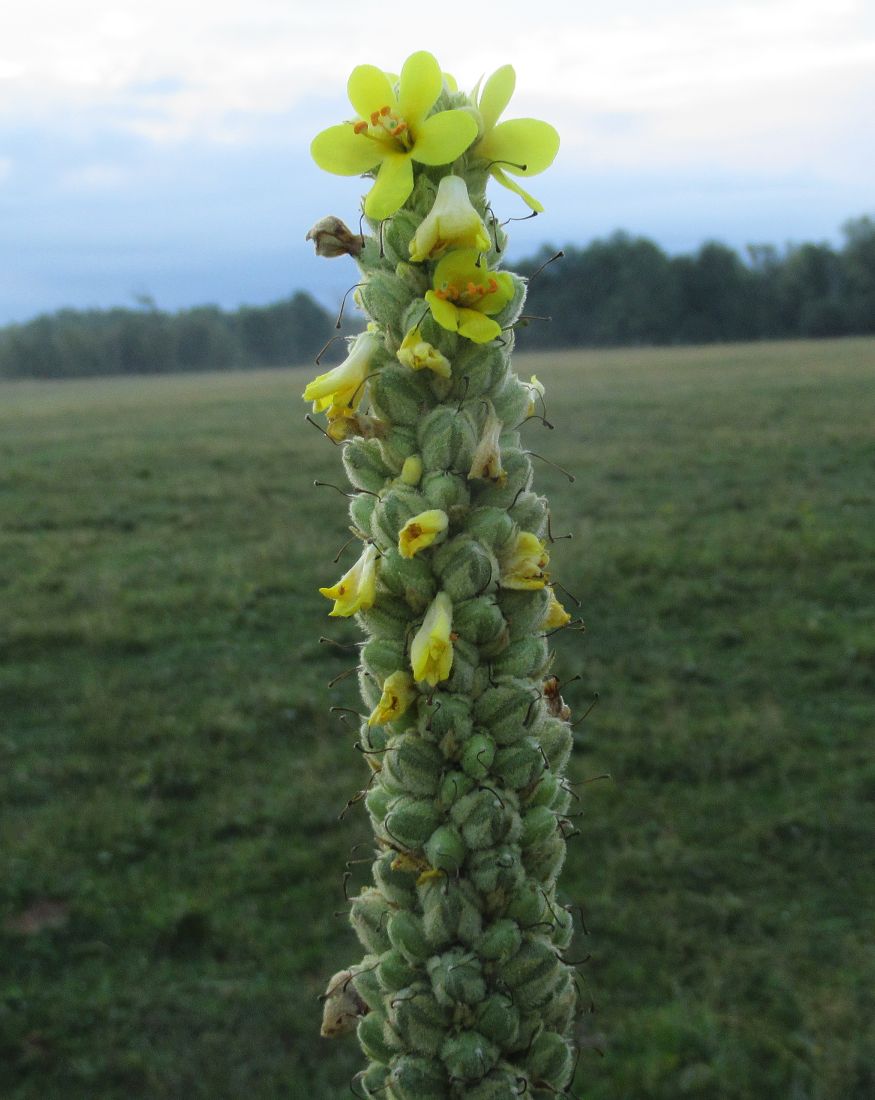
This single Common Mullein stood five feet high and right next to the fence wire (I'd turned off the electricity):
A close-up of Common Mullein's flowers:
This was a familiar old favorite which, for most of my life, I called Coffee Grounds. The real name is Curly (or Curled) Dock, but when we were kids, we'd strip the seeds from the stalk and pretend they were coffee grounds, which they did resemble:
I don't remember Common Boneset ever growing in my fields before, but there is a lot of it this year:
Boneset got its name because its leaves are joined at the stalk, prompting pioneers to think it could heal broken bones. Native Americans knew better and used it for fevers and as an antibiotic/anti-viral. Some people still use it today:
My photo of these minuscule flowers wasn't very good. They were exceedingly small and looked a lot like Lobelia flowers. I looked them up when I got back to the house and decided that they were indeed a form of Lobelia, named Indian Tobacco. They were mostly lavender color although they look white in this photo:
Queen Anne's Lace and St. Johnswort. The day honoring St. John's Day beheading is coming up and I must remember to test the sap to see if it is red:
Just a few steps farther and I saw Common Boneset (more on this later in this post), Purple Loosestrife and Goldenrod:
But what on earth were these tiny, daisy-like flowers? I took a number of photos to look them up back in the house:
I looked them up and decided that they were probably Tradescant's Aster, a new plant for me. I later found a picture of Prairie Fleabane and thought that it might be that also. Whatever it was, it was interesting:
This single Common Mullein stood five feet high and right next to the fence wire (I'd turned off the electricity):
A close-up of Common Mullein's flowers:
This was a familiar old favorite which, for most of my life, I called Coffee Grounds. The real name is Curly (or Curled) Dock, but when we were kids, we'd strip the seeds from the stalk and pretend they were coffee grounds, which they did resemble:
I don't remember Common Boneset ever growing in my fields before, but there is a lot of it this year:
Boneset got its name because its leaves are joined at the stalk, prompting pioneers to think it could heal broken bones. Native Americans knew better and used it for fevers and as an antibiotic/anti-viral. Some people still use it today:
My photo of these minuscule flowers wasn't very good. They were exceedingly small and looked a lot like Lobelia flowers. I looked them up when I got back to the house and decided that they were indeed a form of Lobelia, named Indian Tobacco. They were mostly lavender color although they look white in this photo:
Queen Anne's Lace and St. Johnswort. The day honoring St. John's Day beheading is coming up and I must remember to test the sap to see if it is red:
Sunday, August 19, 2018
After The Rains
Our long heat wave and drought finally came to an end - not with a deluge but with gradual, gentle rains which slowly brought the land back to life. The east side of the barn, however, was faster to recover as mushrooms sprang up overnight:
Curiously attractive little fungi of several kinds, I found them kind of charming. That they signaled the end of the drought certainly added to their attractiveness:
The new row of Day lilies bloomed:
Including a third variety which I hadn't seen before. This one was called a Pink Paradise, which a friend said would make a good name for a gay bar:
And speaking of flowers, I put more in a vase to brink to church, but this time it was all wildflowers - Purple Loosestrife and Joe-Pye-Weed:
And the gentle rains brought forth these miniature plants, Dwarf Cinquefoil:
They are so tiny that it's hard to believe they're related to their more common, bigger cousins. A close-up view, however, reveals the similarities:

The fantail pigeons continued to hatch babies and a number of them survived and are doing well. This one, up on a shelf in a cake tin, always seems to be deep in thought when it looks at me:
A parent on a cake tin nest:

This baby was newly hatched on the floor when I first saw it, still almost the size of the egg from which it emerged. Babies raised on the floor initially face more danger but escape the wrath of older birds which babies from high shelf nests endure when they first land on the ground:
The parents of the newly hatched baby (above) rushed over to cover it when they saw me taking photos:
Alas, it's not all good news. My one and only Globe Thistle turned brown and died for unknown reasons. I sprayed it with fungicide, thinking that might help, but it did not. It may be back next spring but if not, I've already got my eye on some new hardy roses:
Curiously attractive little fungi of several kinds, I found them kind of charming. That they signaled the end of the drought certainly added to their attractiveness:
The new row of Day lilies bloomed:
Including a third variety which I hadn't seen before. This one was called a Pink Paradise, which a friend said would make a good name for a gay bar:
And speaking of flowers, I put more in a vase to brink to church, but this time it was all wildflowers - Purple Loosestrife and Joe-Pye-Weed:
And the gentle rains brought forth these miniature plants, Dwarf Cinquefoil:
They are so tiny that it's hard to believe they're related to their more common, bigger cousins. A close-up view, however, reveals the similarities:
The fantail pigeons continued to hatch babies and a number of them survived and are doing well. This one, up on a shelf in a cake tin, always seems to be deep in thought when it looks at me:
A parent on a cake tin nest:
This baby was newly hatched on the floor when I first saw it, still almost the size of the egg from which it emerged. Babies raised on the floor initially face more danger but escape the wrath of older birds which babies from high shelf nests endure when they first land on the ground:
The parents of the newly hatched baby (above) rushed over to cover it when they saw me taking photos:
Alas, it's not all good news. My one and only Globe Thistle turned brown and died for unknown reasons. I sprayed it with fungicide, thinking that might help, but it did not. It may be back next spring but if not, I've already got my eye on some new hardy roses:
Sunday, September 10, 2017
Around The Farm
Along a country road I observed this tableau: Jewelweed, Purple Loosestrife, Queen Anne's Lace and Sundrops, the day blooming version of Evening Primrose. Behind them is a corn field:
Although the dawns are getting later each day, I still often get to see these glorious skies:
I was surprised to find these calyx (sepals) reminders of June's flowering bonanza on the Mock Orange bush. I had not noticed them before. They are not as showy as the actual flowers, but lovely nonetheless:
The aptly named Butter-And-Eggs:
And my own little patch of Orpine, a wild Sedum. Those are windfall apples in the grass at their feet:
The baby fantail pigeon who had been so badly picked on is almost an adult now, and her injured head is nearly healed. I sometimes find it difficult to pick her out when I enter their room now:
The pear tree has resisted whatever disease struck the apple trees, and the fruit is getting bigger each day:
The only two trees which produced apples are the two alongside the road, away from all the others:
And though their fruit is smaller than usual and falling earlier, they certainly produced a lot of them. I fed them to the cattle a few times but then stopped because I want my cows (and horses) to lose weight:
The little bantam hens are down to only 3 or 4 eggs per day, but they are still pretty to look at and tasty to eat:
I discovered another baby fantail pigeon, this one strong and healthy (and not being picked on). I'm guessing it was ten days old when I discovered it and snapped this photo. They do look like they are related to dinosaurs:
The adult birds mob the water fountain every time I refresh it. I don't know if they are just curious or looking for fresher water (they rake shavings and dried poop into it during the day). They also probably would love a bath and I haven't provided one lately. It's time I did so:
Although the dawns are getting later each day, I still often get to see these glorious skies:
I was surprised to find these calyx (sepals) reminders of June's flowering bonanza on the Mock Orange bush. I had not noticed them before. They are not as showy as the actual flowers, but lovely nonetheless:
The aptly named Butter-And-Eggs:
And my own little patch of Orpine, a wild Sedum. Those are windfall apples in the grass at their feet:
The baby fantail pigeon who had been so badly picked on is almost an adult now, and her injured head is nearly healed. I sometimes find it difficult to pick her out when I enter their room now:
The pear tree has resisted whatever disease struck the apple trees, and the fruit is getting bigger each day:
The only two trees which produced apples are the two alongside the road, away from all the others:
And though their fruit is smaller than usual and falling earlier, they certainly produced a lot of them. I fed them to the cattle a few times but then stopped because I want my cows (and horses) to lose weight:
The little bantam hens are down to only 3 or 4 eggs per day, but they are still pretty to look at and tasty to eat:
I discovered another baby fantail pigeon, this one strong and healthy (and not being picked on). I'm guessing it was ten days old when I discovered it and snapped this photo. They do look like they are related to dinosaurs:
The adult birds mob the water fountain every time I refresh it. I don't know if they are just curious or looking for fresher water (they rake shavings and dried poop into it during the day). They also probably would love a bath and I haven't provided one lately. It's time I did so:
Wednesday, August 27, 2014
Clear Pond, In The White Hill Wild Forest - Part 3
We were almost back to our parked car when I stopped to let the dogs again play at the edge of Clear Pond. A couple of Purple Loosetrife bloomed there and once again I was glad to note that it no longer seems to be an invasive problem:
Pink Steeplebush was also in bloom along the water's edge:
And Clover and Daphne, with their limitless energy and enthusiasm, explored every hill and every hole in the ground:
Clover climbed out onto a rock to survey the lake. Perhaps she was looking for the Loon who was making so much noise:
We continued along the shore toward our parked car:
And I marveled at the wild beauty of the scenery:
Seamus got wet again, though it was too rocky for him to go in very deeply:
Pickerelweed bloomed all along the shore:
And the dogs continued to run, play and explore:
When we were almost back to the parking area, I called the dogs and put them on leashes:
There was only one other car in the forest, a family who was camping near the water's edge. A little girl asked if she could pet the dogs and I agreed. When she asked to pick up Clover, I allowed it, but insisted she learn to do it with plenty of support. So the dogs and I had a grand day at a lovely, wild lake, and a little girl learned the right way to pick up a dog:
Pink Steeplebush was also in bloom along the water's edge:
And Clover and Daphne, with their limitless energy and enthusiasm, explored every hill and every hole in the ground:
Clover climbed out onto a rock to survey the lake. Perhaps she was looking for the Loon who was making so much noise:
We continued along the shore toward our parked car:
And I marveled at the wild beauty of the scenery:
Seamus got wet again, though it was too rocky for him to go in very deeply:
Pickerelweed bloomed all along the shore:
And the dogs continued to run, play and explore:
When we were almost back to the parking area, I called the dogs and put them on leashes:
There was only one other car in the forest, a family who was camping near the water's edge. A little girl asked if she could pet the dogs and I agreed. When she asked to pick up Clover, I allowed it, but insisted she learn to do it with plenty of support. So the dogs and I had a grand day at a lovely, wild lake, and a little girl learned the right way to pick up a dog:
Subscribe to:
Posts (Atom)