Showing posts with label Goldenrod. Show all posts

Friday, September 27, 2019

Wetlands And Wildflowers - Part 3

The dogs and I had walked eastward on the Rutland Trail (see also previous two posts), but had turned back toward our parked car:

I was amazed at the spectacular display of New England Asters:

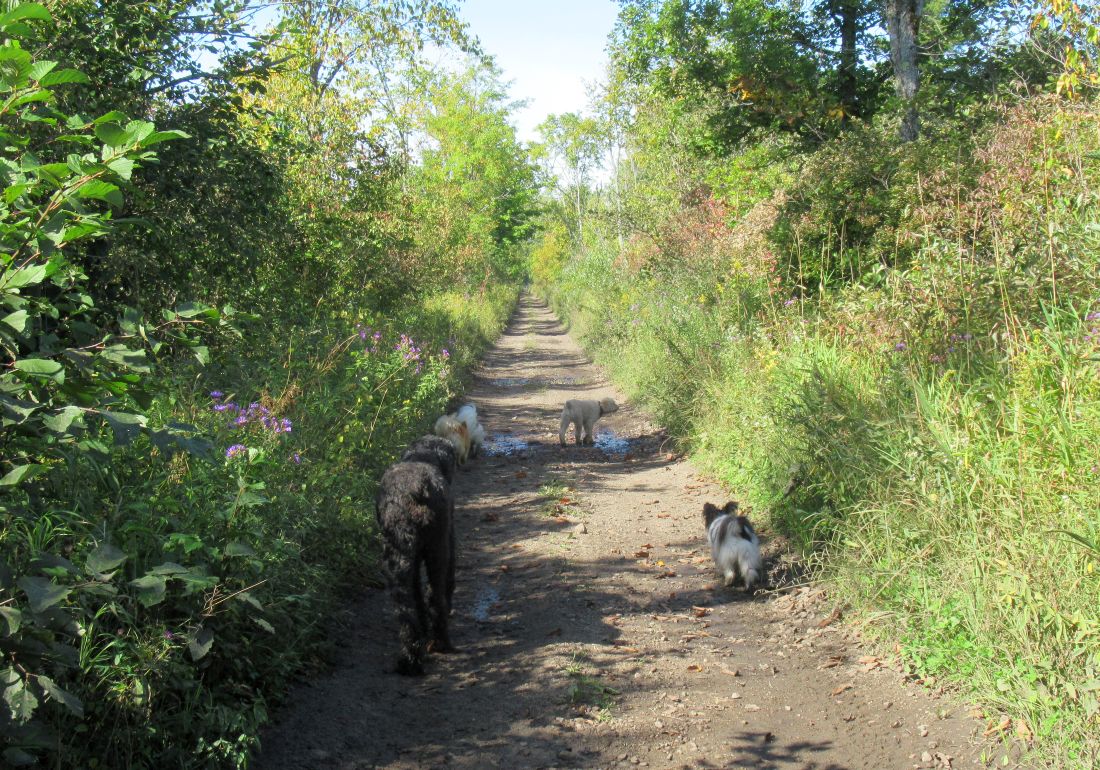
And the dogs were by this point walking calmly with me instead of running ahead:

They always seemed to aim for the puddles, though:

Clover, ever the little adventurer, pushed back through the brush towards a wetland area. Then she decided against it and watched me to see if we were continuing on. We were, so she came with us:

 The Snowy Egret was right were we'd left it, but the angry Canada Goose had left in a huff:

And on we walked, passing by Asters, Goldenrod and Roughleaf Dogwood on our way:

I try to stop the dogs from drinking out of puddles, but sometimes they do so anyway:

More New England Asters:

And tired, muddy dogs:

 Evening Primrose in bloom:

A stop to smell something interesting:

And then onward through the autumn color:

With the end of the trail getting close, the dogs picked up their speed:

They'd had a grand time but were now anxious to get back to the car and rest:

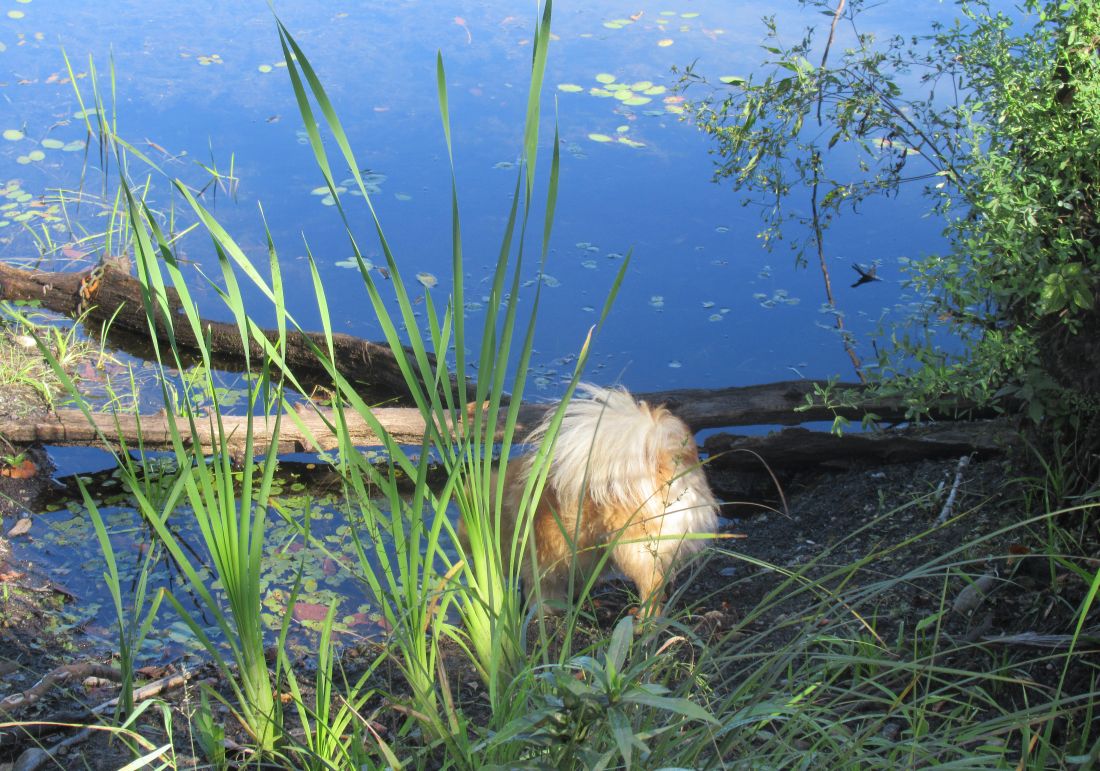
I took one last photo of the pond, a fitting example of the autumnal beauty all around us:

Wednesday, September 25, 2019

Wetlands And Wildflowers - Part 1

The Rutland Nature Trail is only five miles from home, so I go there often. I recently took the dogs on the eastbound portion, a former railroad bed, which led us through wetlands:

The dogs were as excited as ever, maybe more so:

 Most of the Goldenrod by my house was finished blooming, but there was a lot of it along this trail:

And New England Asters, as you see on the left here, were also abundant:

Small White Asters (that's the official common name, not just a description) were also abundant, though less strikingly beautiful:

And the dogs ran up ahead, then back when I yelled at them:

I had recently decided that what I had by my house were New York Asters, not New England Asters. I thought they were variants of the same species but learned that they are different species altogether. Then I decided I had New York Asters and changed all the descriptions in my plant photo files. Sadly, I didn't check my field guide carefully first. When I finally did, I discovered that those by my house were New England Asters. These along the trail - well, I'm not sure and the photos don't reveal enough detail:

But the dogs don't care about such things. They just enjoy getting outdoors and running:

I've never seen a Fringed Gentian except in pictures, but I found one along the trail and it was as beautiful as the pictures had made them seem. Why is no one producing a cultivated variety for flower gardens? I checked online and found several companies selling seeds for these beauties:

 Virginia Creeper was turning bright red:

As we came to the wetlands, Jack went in for a long drink of cool water:

And I looked out over the brush to the opposite shore:

But thick brush mostly prevented us from going too close to the water, so we kept moving eastward along the trail. Autumn colors were already in evidence:

Happy dogs, running free:

I had to look past Small White Asters and Joe-Pye-Weed to see the next pond:

Jack led the way as we continued our eastbound journey. I'll post Part 2 tomorrow:

Wednesday, September 18, 2019

September At Windswept Farm

Blue and Remy continue to spend their days in the outside corral and their nights in the barn. They now accept this as their life and are becoming much better behaved because they get so much handling. I lead them between the barn and corral twice each day and spray them with fly spray twice each day:

Remy is smart and playful, a mischievous troublemaker. I still have to keep an eye on him:

The Red Poll ladies are healthy and lead a life of leisure:

I began treating them to a bit of grain again so that I can get them into the barn when needed. Scarlett's calf needs her ears tattooed, Winston needs to be sold and Rosella needs to be artificially inseminated again. All these things require getting them into the barn:

The sunflowers and Daylilies are still going strong:

The plums ripened and I ate most of them, though there were only a few:

More flowers went to church. This vase contained yellow (wild) Goldenrod, Frans Hals Daylilies and various colors of sunflowers, including the "Teddy Bear" variety at the top:

Purple (wild) New England Aster, two varieties of roses and various colors of Yarrow:

Some years I have toads slipping into my mudroom when I open the door. This year I've had a tiny Spring Peeper. I carefully lift it and set it back outside in the garden:

The tallest sunflowers have reached about 14 feet tall and are branching to make a glorious display. I only recently learned that the flowers turn during the day to always face the sun. I've watched them facing east in the morning, then south midday and west later. It's really quite amazing:

But they also seemed about to fall over, so I hooked blue and yellow bungee cords together, then hooked them to the fence and around the stalks to keep them upright:

By contrast, the smallest sunflowers are only one to two feet tall. The one on the left is a Teddy Bear variety, but I have no idea what kind the others are:

Monday, September 2, 2019

Moving Toward Autumn

I had just finished cleaning the barn floor, hauling multiple loads of sodden bedding and manure out to the compost pile with the tractor bucket. I decided that it was time to re-dig the drainage ditch, which tends to fill in over a few years. I used the tractor bucket, starting at the barn and working my way downhill:

I had to move to the opposite side of the ditch and move my way back up toward the barn before I was finished. I hope that I am now prepared for big rainstorms and snow melts:

I've been calling this the Carefree Delight, but I began to doubt when I looked at the website and saw what it was supposed to look like. I emailed the nursery owner and he identified it instantly. This is a Carefree Beauty and it is grown right next to the Carefree Delight. The similarity in location and names caused the workers to pull the wrong plant. He said he'd send the correct rose immediately but I asked him to wait until springtime, when I will probably add a couple more rose varieties. I did notice that both Carefree roses grow quite large, so I'll probably move this one and plant both new roses together in the middle of the lawn somewhere:

When all the other varieties of Daylily were almost done for the year, the Frans Hals variety burst into bloom and hasn't quit yet. It is by far my favorite:

This is a tall mass of weeds which I mow around whenever I cut the lawn. It consisted mostly of Goldenrod and Wild Cucumber in bloom, and Wild Grapevine not in bloom:

And I've kept bringing flowers to church on Sunday. This was multiple colors of Yarrow plus my Frans Hals Daylilies:

Another vase contained purple (wild) Joe-Pye-Weed, yellow (wild) Goldenrod and various colors of Sunflowers:

The Amish farm down the road had Sunflower also, but apparently a variety grown for its edible seed. The sweet corn was growing right next to them:

I was driving past my own place on the county road one day when I stopped and snapped a picture of my cows, filing past the horse corral on their way to the stock tank for a drink of cool, clean water:

And in many places along my road, the field corn was ripening. Spring rains meant late planting, but short season varieties and good drainage in some fields allowed them to ripen almost on schedule:

I used my zoom lens for a closeup of the ripening ears of corn. Yes, winter is on the way - but beautiful autumn will arrive first: