It was raining and the weather service predicted only more of the same throughout the day. Besides, the Hopkinton Town Museum is only open two hours per day, one day per week, two months per year. If I was going to see it again, this was the time. So I drove to the quiet village green and parked:
The Museum is most of this red building, including the wing on the right and the small shed on the left, with a small section in the middle for the library. I entered by means of the ramp to get out of the rain as soon as possible:
I began in the dining room:
And looked at all the china and tea servers which local folks had held onto for many years, eventually donating them to the museum:
The parlor was warm and friendly - and a bit formal, I thought, for a frontier town:
There were interesting items and signs here and there:
All in all, a pleasant place to spend part of a rainy Saturday:
This ancient piano was recently tuned and one of only two on public display:
Collections of jewelry, books, odds and ends:
Clothing and dolls from days gone by:
The museum was a mixture of time periods but many small signs helped me place the articles in proper perspective or, in some cases, understand what they were:
This quilt depicted scenes from the town's past and was put together on Hopkinton's 200th anniversary:
This dress didn't look too terribly old to me, but then I myself am so old that my perspective is skewed:
A magnificent pump organ:
And a marble mantle clock. But there was still more to see and I'll post Part 2 tomorrow:
Showing posts with label pump organ. Show all posts
Sunday, July 24, 2016
Friday, February 12, 2016
A Visit To The Potsdam, New York Museum - Part 1
One day I decided to tour the town museum in Potsdam, New York. I'd been there before, of course, but they keep changing things to keep it interesting:
The museum, town offices and library are in what used to be the Unitarian Church and, though the windows you see are clear glass, many others are still stained glass:
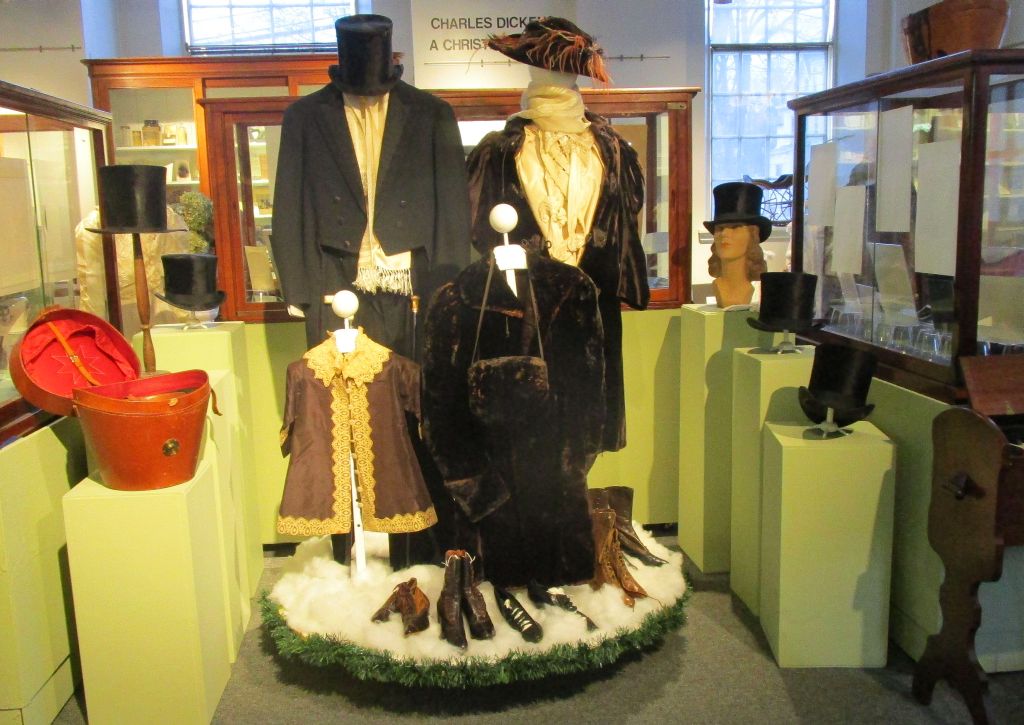
The museum had a theme of "Portraits Of Potsdam Families" but there was also a Victorian Era theme, left over from their "Charles Dickens Christmas." Potsdam was a boom town in the Victorian Era, rich on furs, ores and lumber:
There were top hats (and a red hat box, made especially for top hats, in the above photo):
A small pump organ, circa 1880, used as a practice organ by Julia Crane, founder of what is now the Crane School of Music in Potsdam:
The Raymond family of Potsdam. I wish now that I'd gotten closeups of the portraits, but you can click on this photo to enlarge it:
A lovely bureau from the Victorian Era:
And a Windsor-style writing desk, c. 1816-27:
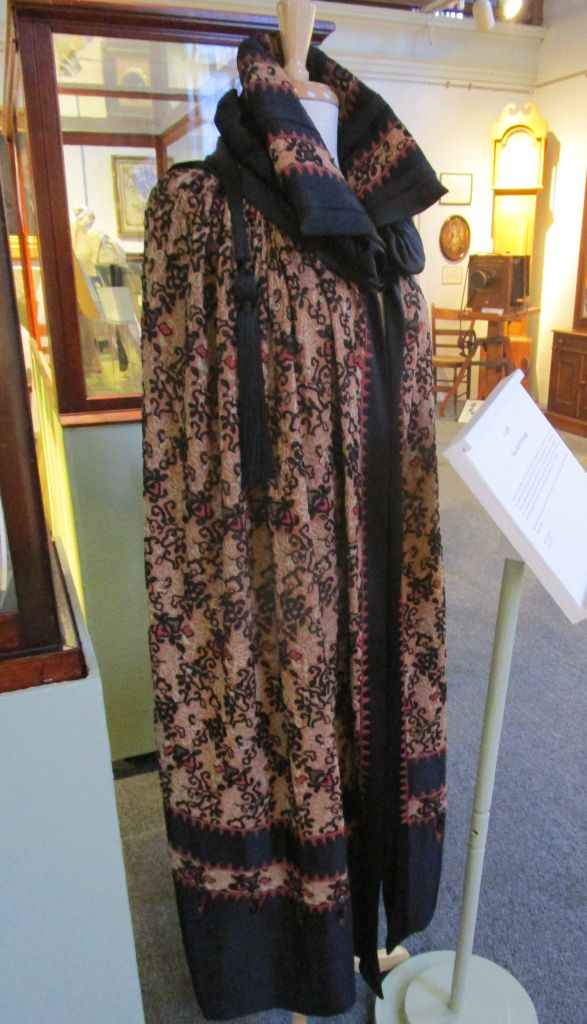
A woman's evening cape, c. 1920, of tan silk with beige, black and red embroidery all over:
The Shoenhut Company, established in 1872, became noted for their toy pianos. They were more than just toys, though, for they stayed in tune and were accompanied by sheet music to encourage the children to play:
I didn't know whether to call this a settee or loveseat, so I checked and discovered that it could be called either. Loveseats, however, usually had two separate cushions, one for each person, so I'll call this a Victorian settee:
Children's clothing and toys:
This black, wooden pony came with a detailed explanation, which I'll post just below it:
For the black pony in the above photo:
The Blackmon family: Jennie Ketcham Blackmon and her four sisters. There was more to see at the Potsdam Museum, though, and I'll post Part 2 tomorrow:
The museum, town offices and library are in what used to be the Unitarian Church and, though the windows you see are clear glass, many others are still stained glass:
The museum had a theme of "Portraits Of Potsdam Families" but there was also a Victorian Era theme, left over from their "Charles Dickens Christmas." Potsdam was a boom town in the Victorian Era, rich on furs, ores and lumber:
There were top hats (and a red hat box, made especially for top hats, in the above photo):
A small pump organ, circa 1880, used as a practice organ by Julia Crane, founder of what is now the Crane School of Music in Potsdam:
The Raymond family of Potsdam. I wish now that I'd gotten closeups of the portraits, but you can click on this photo to enlarge it:
A lovely bureau from the Victorian Era:
And a Windsor-style writing desk, c. 1816-27:
A woman's evening cape, c. 1920, of tan silk with beige, black and red embroidery all over:
The Shoenhut Company, established in 1872, became noted for their toy pianos. They were more than just toys, though, for they stayed in tune and were accompanied by sheet music to encourage the children to play:
I didn't know whether to call this a settee or loveseat, so I checked and discovered that it could be called either. Loveseats, however, usually had two separate cushions, one for each person, so I'll call this a Victorian settee:
Children's clothing and toys:
This black, wooden pony came with a detailed explanation, which I'll post just below it:
For the black pony in the above photo:
The Blackmon family: Jennie Ketcham Blackmon and her four sisters. There was more to see at the Potsdam Museum, though, and I'll post Part 2 tomorrow:
Sunday, June 28, 2015
The Colton, New York Museum - Part 1
The little Adirondack town of Colton, New York sits on the scenic banks of the Raquette River and I drove there one sunny Saturday to see the town museum:
The museum was located in an old house, which was once the parsonage for the Episcopal church which is still right next door. I learned that this house once also served as a temporary school after the main school had a fire. Now it is the town museum:
I signed in, got a bit of local lore from the historian and began my tour in a room devoted to the Colton Fire Department's 100th anniversary. I was most taken, however, by this church pump organ:
And sitting atop the organ was this bit of calendar kitsch from the year 1915, exactly 100 years ago:
I walked slowly around the museum, snapping pictures where I could. It was difficult because the rooms were dark (an old fashioned fuse had blown that morning) and the bright sun was streaming through the windows. Our eyes know how to handle that but cameras have a lot of trouble. I was enthralled by this old kitchen. It seemed to have popped right out of my childhood:
A coffee grinder from Cook's store in Colton, 1923:
An old radio:
An old style telephone. Even I am not old enough to remember these being used:
I was surprised when I saw the bathroom, looking much as it did 50 years ago:
An entire back room was devoted to Adirondack and Raquette River tools, occupations and lore:
This was a frontier town not too long ago and the exhibits in this room illustrated the town's pride in that heritage. There were stuffed animals, birch trees, campfire setups and all manner of Adirondack memorabilia:
And of course snowshoes and mounted fish, both reminders of winters in the forests and fishing on the Raquette River. But there was still more to see, and I'll post Part 2 tomorrow:
The museum was located in an old house, which was once the parsonage for the Episcopal church which is still right next door. I learned that this house once also served as a temporary school after the main school had a fire. Now it is the town museum:
I signed in, got a bit of local lore from the historian and began my tour in a room devoted to the Colton Fire Department's 100th anniversary. I was most taken, however, by this church pump organ:
And sitting atop the organ was this bit of calendar kitsch from the year 1915, exactly 100 years ago:
I walked slowly around the museum, snapping pictures where I could. It was difficult because the rooms were dark (an old fashioned fuse had blown that morning) and the bright sun was streaming through the windows. Our eyes know how to handle that but cameras have a lot of trouble. I was enthralled by this old kitchen. It seemed to have popped right out of my childhood:
A coffee grinder from Cook's store in Colton, 1923:
An old radio:
An old style telephone. Even I am not old enough to remember these being used:
I was surprised when I saw the bathroom, looking much as it did 50 years ago:
An entire back room was devoted to Adirondack and Raquette River tools, occupations and lore:
This was a frontier town not too long ago and the exhibits in this room illustrated the town's pride in that heritage. There were stuffed animals, birch trees, campfire setups and all manner of Adirondack memorabilia:
And of course snowshoes and mounted fish, both reminders of winters in the forests and fishing on the Raquette River. But there was still more to see, and I'll post Part 2 tomorrow:
Sunday, August 24, 2014
A Trip To The Hopkinton Town Museum
I got to thinking that it had been several years since I'd seen the Hopkinton Town Museum and August was the month when it was open, albeit for only a few hours. So I searched the internet for the schedule and found none. I began making phone calls and found the president of the Historical Society who said it was open for two hours that very day, though he couldn't guarantee it because the volunteers had forgotten to open up the previous two Saturdays. So I drove down to the lovely, shady village green:
I parked, and walked over to the museum building:
Inside, they had a very old and beautiful pump organ:
Various mannequins, dressed in period clothing:
A comfortable parlor from a bygone era:
I climbed the stairs and found lots of quilts:
The signature or friendship quilt, with all the people's names, was especially interesting. I could only guess what the "$1.60 amt" meant. Perhaps it was a fund raiser, and these people had donated $1.60 each, a lot of money back in the day:
And just when was "back in the day?" Another panel on that same friendship quilt told the story. It was stitched in 1902:
There was an entire room devoted to old fashioned school houses:
And a bedroom, complete with a set of "woolies" long underwear, hanging on the footboard:
Downstairs in the kitchen, this wonderful cupboard intrigued me. I've searched the internet for exactly what to call it, but "cupboard" is all I could come up with. Any ideas?:
The kitchen, of course, had a great wood stove. There were two other outbuildings which I'd visited last time, but the volunteer had no keys. So I thanked her for her kindness and returned home. I am glad that so many towns are preserving bits of their history. Perhaps there is hope for the human race yet:
I parked, and walked over to the museum building:
Inside, they had a very old and beautiful pump organ:
Various mannequins, dressed in period clothing:
A comfortable parlor from a bygone era:
I climbed the stairs and found lots of quilts:
The signature or friendship quilt, with all the people's names, was especially interesting. I could only guess what the "$1.60 amt" meant. Perhaps it was a fund raiser, and these people had donated $1.60 each, a lot of money back in the day:
And just when was "back in the day?" Another panel on that same friendship quilt told the story. It was stitched in 1902:
There was an entire room devoted to old fashioned school houses:
And a bedroom, complete with a set of "woolies" long underwear, hanging on the footboard:
Downstairs in the kitchen, this wonderful cupboard intrigued me. I've searched the internet for exactly what to call it, but "cupboard" is all I could come up with. Any ideas?:
The kitchen, of course, had a great wood stove. There were two other outbuildings which I'd visited last time, but the volunteer had no keys. So I thanked her for her kindness and returned home. I am glad that so many towns are preserving bits of their history. Perhaps there is hope for the human race yet:
Subscribe to:
Posts (Atom)