It was raining and the weather service predicted only more of the same throughout the day. Besides, the Hopkinton Town Museum is only open two hours per day, one day per week, two months per year. If I was going to see it again, this was the time. So I drove to the quiet village green and parked:
The Museum is most of this red building, including the wing on the right and the small shed on the left, with a small section in the middle for the library. I entered by means of the ramp to get out of the rain as soon as possible:
I began in the dining room:
And looked at all the china and tea servers which local folks had held onto for many years, eventually donating them to the museum:
The parlor was warm and friendly - and a bit formal, I thought, for a frontier town:
There were interesting items and signs here and there:
All in all, a pleasant place to spend part of a rainy Saturday:
This ancient piano was recently tuned and one of only two on public display:
Collections of jewelry, books, odds and ends:
Clothing and dolls from days gone by:
The museum was a mixture of time periods but many small signs helped me place the articles in proper perspective or, in some cases, understand what they were:
This quilt depicted scenes from the town's past and was put together on Hopkinton's 200th anniversary:
This dress didn't look too terribly old to me, but then I myself am so old that my perspective is skewed:
A magnificent pump organ:
And a marble mantle clock. But there was still more to see and I'll post Part 2 tomorrow:
Showing posts with label piano. Show all posts
Sunday, July 24, 2016
Friday, February 12, 2016
A Visit To The Potsdam, New York Museum - Part 1
One day I decided to tour the town museum in Potsdam, New York. I'd been there before, of course, but they keep changing things to keep it interesting:
The museum, town offices and library are in what used to be the Unitarian Church and, though the windows you see are clear glass, many others are still stained glass:
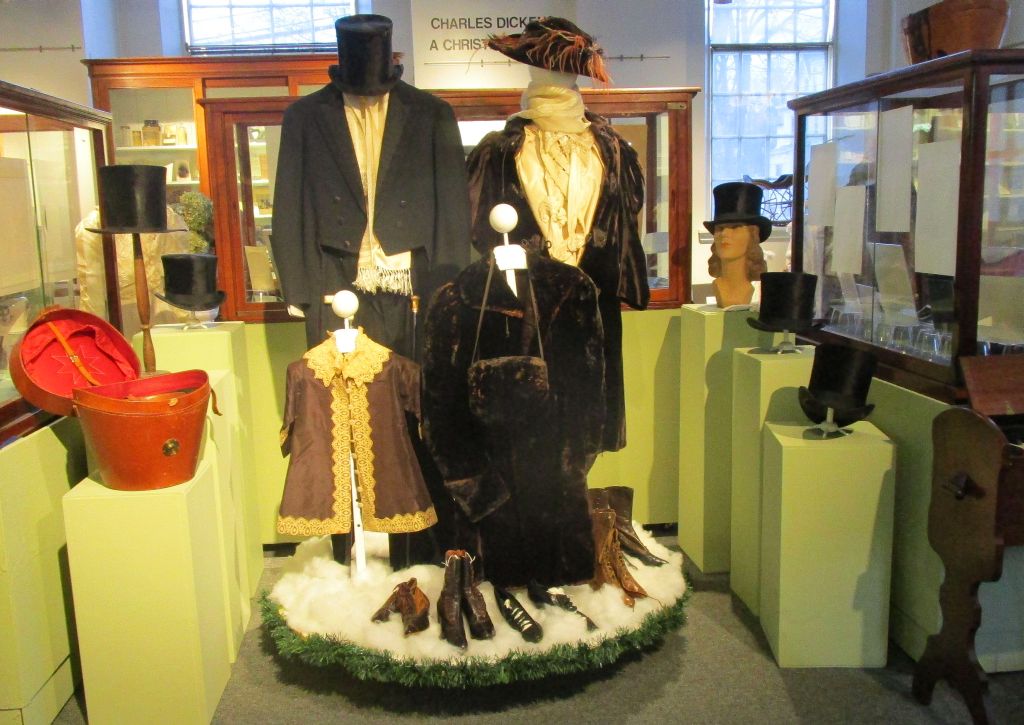
The museum had a theme of "Portraits Of Potsdam Families" but there was also a Victorian Era theme, left over from their "Charles Dickens Christmas." Potsdam was a boom town in the Victorian Era, rich on furs, ores and lumber:
There were top hats (and a red hat box, made especially for top hats, in the above photo):
A small pump organ, circa 1880, used as a practice organ by Julia Crane, founder of what is now the Crane School of Music in Potsdam:
The Raymond family of Potsdam. I wish now that I'd gotten closeups of the portraits, but you can click on this photo to enlarge it:
A lovely bureau from the Victorian Era:
And a Windsor-style writing desk, c. 1816-27:
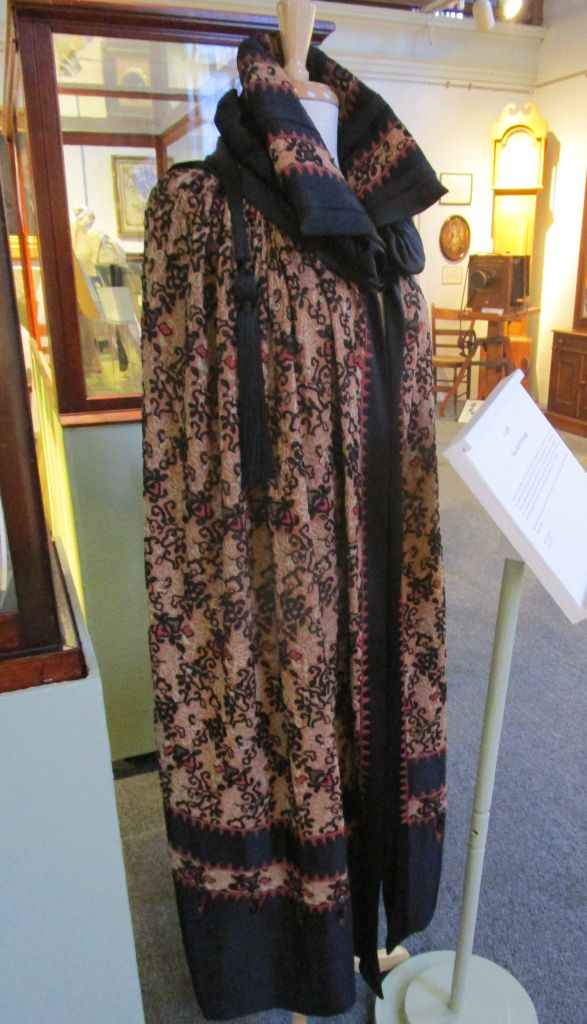
A woman's evening cape, c. 1920, of tan silk with beige, black and red embroidery all over:
The Shoenhut Company, established in 1872, became noted for their toy pianos. They were more than just toys, though, for they stayed in tune and were accompanied by sheet music to encourage the children to play:
I didn't know whether to call this a settee or loveseat, so I checked and discovered that it could be called either. Loveseats, however, usually had two separate cushions, one for each person, so I'll call this a Victorian settee:
Children's clothing and toys:
This black, wooden pony came with a detailed explanation, which I'll post just below it:
For the black pony in the above photo:
The Blackmon family: Jennie Ketcham Blackmon and her four sisters. There was more to see at the Potsdam Museum, though, and I'll post Part 2 tomorrow:
The museum, town offices and library are in what used to be the Unitarian Church and, though the windows you see are clear glass, many others are still stained glass:
The museum had a theme of "Portraits Of Potsdam Families" but there was also a Victorian Era theme, left over from their "Charles Dickens Christmas." Potsdam was a boom town in the Victorian Era, rich on furs, ores and lumber:
There were top hats (and a red hat box, made especially for top hats, in the above photo):
A small pump organ, circa 1880, used as a practice organ by Julia Crane, founder of what is now the Crane School of Music in Potsdam:
The Raymond family of Potsdam. I wish now that I'd gotten closeups of the portraits, but you can click on this photo to enlarge it:
A lovely bureau from the Victorian Era:
And a Windsor-style writing desk, c. 1816-27:
A woman's evening cape, c. 1920, of tan silk with beige, black and red embroidery all over:
The Shoenhut Company, established in 1872, became noted for their toy pianos. They were more than just toys, though, for they stayed in tune and were accompanied by sheet music to encourage the children to play:
I didn't know whether to call this a settee or loveseat, so I checked and discovered that it could be called either. Loveseats, however, usually had two separate cushions, one for each person, so I'll call this a Victorian settee:
Children's clothing and toys:
This black, wooden pony came with a detailed explanation, which I'll post just below it:
For the black pony in the above photo:
The Blackmon family: Jennie Ketcham Blackmon and her four sisters. There was more to see at the Potsdam Museum, though, and I'll post Part 2 tomorrow:
Thursday, April 2, 2015
The Massena, New York Museum - Part 1
Our snow was beginning to melt and I felt inspired to tour the Massena, New York Museum:
The museum was a colorful, spacious assortment of all kinds of things from many different eras. They had lots of Easter themed displays:
The museum had musical displays:
And a handmade, Victorian doll house. I could see that it was filled with furniture but I couldn't see in through the back. I should have asked for a special look, but I didn't:
I was shocked when I saw this torture device - and then realized it was a hair curler from a beauty parlor:
On second thought, I suppose some would have maintained that it was indeed a torture device:
Easter bonnets:
And a history of sewing:
The Massena Police Department:
An old fashioned school room:
Medical devices from bygone eras:
More sewing equipment. And there was still more to see at the museum. Tune in tomorrow for Part 2:
The museum was a colorful, spacious assortment of all kinds of things from many different eras. They had lots of Easter themed displays:
The museum had musical displays:
And a handmade, Victorian doll house. I could see that it was filled with furniture but I couldn't see in through the back. I should have asked for a special look, but I didn't:
I was shocked when I saw this torture device - and then realized it was a hair curler from a beauty parlor:
On second thought, I suppose some would have maintained that it was indeed a torture device:
Easter bonnets:
And a history of sewing:
The Massena Police Department:
An old fashioned school room:
Medical devices from bygone eras:
More sewing equipment. And there was still more to see at the museum. Tune in tomorrow for Part 2:
Subscribe to:
Posts (Atom)