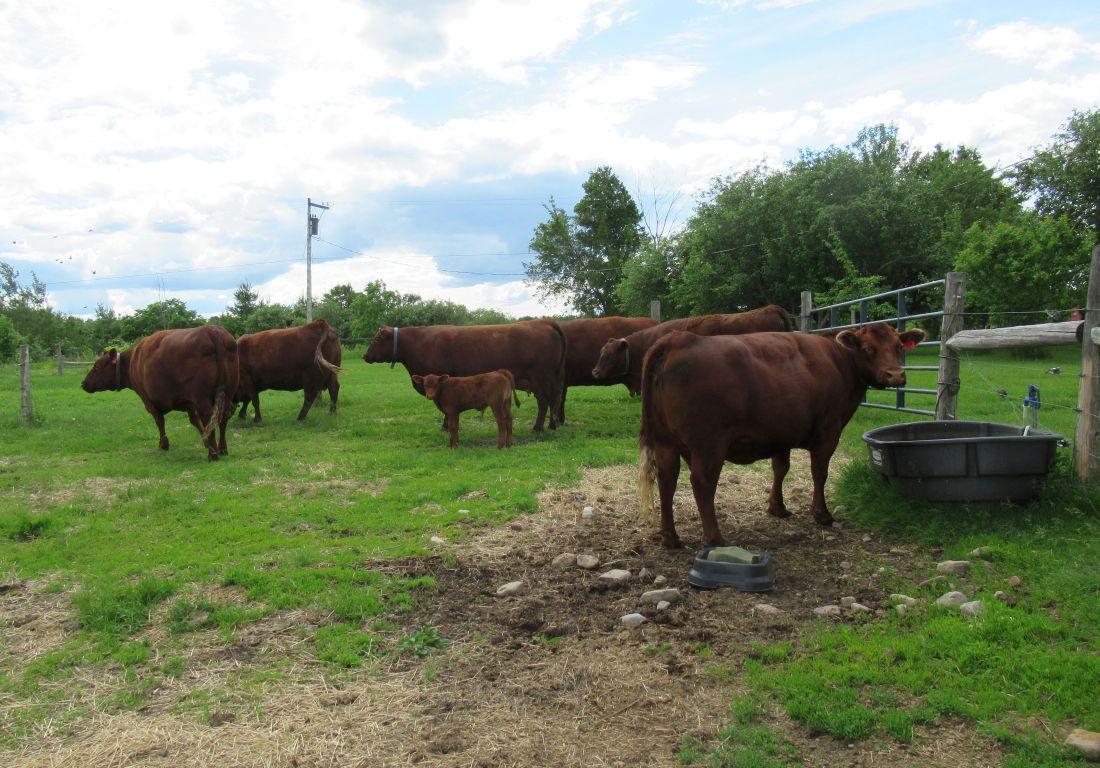
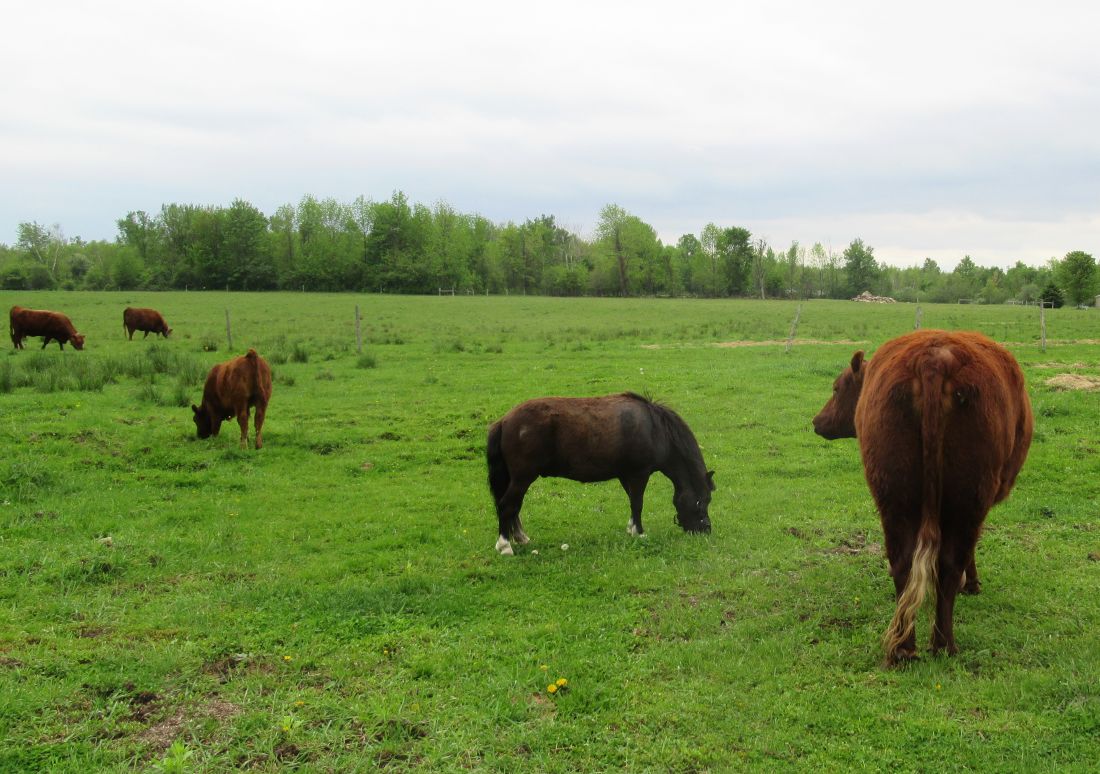
This is a beautiful time of year for taking pictures of the Red Poll girls:
And of little Winston, who seems to find me fascinating. He was considerate to stand next to a Buttercup for this picture:
It's a lazy time of year for my full figured girls who the neighbors called hippos one day:
Auntie Jasmine and Winston:
Lazy summer days in the south field:
And the Buttercups enhance the pictures:
They won't eat the Buttercups, so they proliferate:
Life is good:
Rosella and her boy, Winston:
Eating and sleeping, a life I could easily get used to myself:
Jasmine:
A trip to the stock tank for water:
Showing posts with label Buttercups. Show all posts
Sunday, July 7, 2019
Friday, June 28, 2019
Random Shots Around The Farm
The Sunflower seeds were the first to come up although the bed had a big bare spot where nothing came up:
The new Day Lily roots began to grow, but the reason I took this photo was to illustrate how fast the weeds grow here. This bed was weeded less than 24 hours earlier, and just look at all the new weeds coming up!
The new baby fantail pigeon is looking good!
And many other adults are nesting:
Out in the pasture, Buttercups and Common Fleabane are in bloom:
A close-up of Common Fleabane:
The shoot I rooted from the old fashioned rose I saved is blooming, though the parent plant is not yet flowering because I cut it back to about one foot high this year (as I also did the Rugosa Roses):
I thought my little Magnolia died over the winter, but it has slowly come back to life and even produced one flower - a month or so late, but I'm still happy to see it:
The bigger of the two Ninebarks began to bud and put on quite a colorful show. I remember thinking last year that the buds were prettier than the flowers:
I cut a vase full of Buttercups from the pasture and a vase full of purple Iris from beside the door and brought them to church:
The little hens seem busy and enjoying life. They may not get out anymore, but life is otherwise very good for them:
I planted the six new roses along the road and they are not yet growing much - but this one, called Carefree Beauty, has already bloomed. Apparently it really is carefree and that's a good thing, for I'm not much for providing a lot of care:
The new Day Lily roots began to grow, but the reason I took this photo was to illustrate how fast the weeds grow here. This bed was weeded less than 24 hours earlier, and just look at all the new weeds coming up!
The new baby fantail pigeon is looking good!
And many other adults are nesting:
Out in the pasture, Buttercups and Common Fleabane are in bloom:
A close-up of Common Fleabane:
The shoot I rooted from the old fashioned rose I saved is blooming, though the parent plant is not yet flowering because I cut it back to about one foot high this year (as I also did the Rugosa Roses):
I thought my little Magnolia died over the winter, but it has slowly come back to life and even produced one flower - a month or so late, but I'm still happy to see it:
The bigger of the two Ninebarks began to bud and put on quite a colorful show. I remember thinking last year that the buds were prettier than the flowers:
I cut a vase full of Buttercups from the pasture and a vase full of purple Iris from beside the door and brought them to church:
The little hens seem busy and enjoying life. They may not get out anymore, but life is otherwise very good for them:
I planted the six new roses along the road and they are not yet growing much - but this one, called Carefree Beauty, has already bloomed. Apparently it really is carefree and that's a good thing, for I'm not much for providing a lot of care:
Friday, June 22, 2018
Cleaning and Haying In June
The north field (in the background) was filled with tall grass, all ready to be hayed, so when I decided to clean up the cedar branches and old, rotten lumber from my wall repair, I drove to the wood pile along the outside of the fence. That way I didn't knock down any of the soon-to-be hay. It took two bucket loads to clear it all away:
I was wrong about there not being any baby fantail pigeons. I discovered this one high up on a shelf nest where I just hadn't noticed it before. It's a quiet, inactive bird and quite unlike some of the loud, hyperactive babies which have gotten themselves into trouble in the past. Maybe the parents are just keeping it so well fed it only lies there and burps all day:
Yellow Day Lilies began blooming amid a clump of Peonies. They appear every year without any assistance from me except to mow around the clump:
Out in the pasture, I saw these Common Fleabane flowers. There used to be more of them when I first moved here:
We were predicted to have nearly a week of idyllic weather, and one day my neighbor began lining up his haying equipment on my lawn:
Meanwhile, I began brush hogging the pasture. The tall weeds were hiding the horses' heads when I tried to see if they still had their muzzles on. Furthermore, I was spending several hours each day searching for lost muzzles. It took about six hours over two days to get it all bush hogged:
The wildflowers were pretty, but Buttercups were taking over. They are inedible and increasing because they kept dropping seed. You can see here the uncut portion on the left, and a mowed section on the right. The bush hog cuts rather high, so I am hoping it didn't disturb many bird nests:
But let's face it - a wildflower meadow is a beautiful thing. I wanted a photo of it before I chopped off all those flower heads:
Meanwhile, my two neighbors (a nephew and his uncle) began haying, then tedding. Tedding is when they turn over the cut hay to help it dry in the sun. They had to ted it multiple times before they began baling:
And then they attached the baler, followed by a hay wagon. This year he had a brand new kicker, which tosses the finished bales up in the air and into the wagon, where the uncle caught it and stacked it neatly. I had to take a number of photos to get one which showed an airborne bale, but you can see it in this picture, just entering the front of the hay wagon. Click on the photo if you want to enlarge it:
The horses and cattle ignored all the activity and lounged and grazed peacefully in the south field pasture:
The fantail pigeons were enjoying life in the barn. They are sociable birds with each other and also, in their own way, with me. They know where their food, water and bedding comes from:
I was wrong about there not being any baby fantail pigeons. I discovered this one high up on a shelf nest where I just hadn't noticed it before. It's a quiet, inactive bird and quite unlike some of the loud, hyperactive babies which have gotten themselves into trouble in the past. Maybe the parents are just keeping it so well fed it only lies there and burps all day:
Yellow Day Lilies began blooming amid a clump of Peonies. They appear every year without any assistance from me except to mow around the clump:
Out in the pasture, I saw these Common Fleabane flowers. There used to be more of them when I first moved here:
We were predicted to have nearly a week of idyllic weather, and one day my neighbor began lining up his haying equipment on my lawn:
Meanwhile, I began brush hogging the pasture. The tall weeds were hiding the horses' heads when I tried to see if they still had their muzzles on. Furthermore, I was spending several hours each day searching for lost muzzles. It took about six hours over two days to get it all bush hogged:
The wildflowers were pretty, but Buttercups were taking over. They are inedible and increasing because they kept dropping seed. You can see here the uncut portion on the left, and a mowed section on the right. The bush hog cuts rather high, so I am hoping it didn't disturb many bird nests:
But let's face it - a wildflower meadow is a beautiful thing. I wanted a photo of it before I chopped off all those flower heads:
Meanwhile, my two neighbors (a nephew and his uncle) began haying, then tedding. Tedding is when they turn over the cut hay to help it dry in the sun. They had to ted it multiple times before they began baling:
And then they attached the baler, followed by a hay wagon. This year he had a brand new kicker, which tosses the finished bales up in the air and into the wagon, where the uncle caught it and stacked it neatly. I had to take a number of photos to get one which showed an airborne bale, but you can see it in this picture, just entering the front of the hay wagon. Click on the photo if you want to enlarge it:
The horses and cattle ignored all the activity and lounged and grazed peacefully in the south field pasture:
The fantail pigeons were enjoying life in the barn. They are sociable birds with each other and also, in their own way, with me. They know where their food, water and bedding comes from:
Monday, June 18, 2018
Spring Has Become Summer
The cattle seem peaceful and happy. Both Rocket and Lucky are growing like wildfire. Rocket is sold and I have a deposit on him, but he hasn't yet been picked up:
The apple trees produced hardly any flowers this spring, but they are alive. Alas, the Bush Cherry which had done so well the last few years is completely dead. I now need to remove the frame around it and cut the dead bush down:
I was out in the south field, searching for the horses' muzzles one afternoon, when I saw this patch of Ragged Robin growing around a fence post. I thought it was a photo-worthy scene:
The cherry tree has produced some baby cherries:
And baby plums on the usually productive tree. I saw none on the second plum tree which bloomed for the first time this year:
Baby pears. The pear tree seems to be doing well:

One Sunday morning I collected some yellow and purple Iris, mixed them with Spirea branches and put them in a vase. I took them to church, then back home to sit on my kitchen counter:
Remy had shucked his muzzle and was running away from me when I took this photo. He had no intention of holding still while I put it back on. It was otherwise a pleasant scene:
The south field, filled with Buttercups and Ragged Robin:
And as I searched the fence line for the muzzles the horses had jettisoned, I snapped a picture of these Fleabane and Ragged Robin flowers:
The fence line runs behind an old stone wall, which presented me with a miniature woodland scene:
And Cow Vetch seems to be growing everywhere right now. June is a pleasant month except that there is so much work to do:
The apple trees produced hardly any flowers this spring, but they are alive. Alas, the Bush Cherry which had done so well the last few years is completely dead. I now need to remove the frame around it and cut the dead bush down:
I was out in the south field, searching for the horses' muzzles one afternoon, when I saw this patch of Ragged Robin growing around a fence post. I thought it was a photo-worthy scene:
The cherry tree has produced some baby cherries:
And baby plums on the usually productive tree. I saw none on the second plum tree which bloomed for the first time this year:
Baby pears. The pear tree seems to be doing well:
One Sunday morning I collected some yellow and purple Iris, mixed them with Spirea branches and put them in a vase. I took them to church, then back home to sit on my kitchen counter:
Remy had shucked his muzzle and was running away from me when I took this photo. He had no intention of holding still while I put it back on. It was otherwise a pleasant scene:
The south field, filled with Buttercups and Ragged Robin:
And as I searched the fence line for the muzzles the horses had jettisoned, I snapped a picture of these Fleabane and Ragged Robin flowers:
The fence line runs behind an old stone wall, which presented me with a miniature woodland scene:
And Cow Vetch seems to be growing everywhere right now. June is a pleasant month except that there is so much work to do:
Friday, June 15, 2018
Flowers, Horses And Birds
The pasture is lush now, growing faster than the herd can eat it down. With my worry about the horses and founder - and the cows and obesity, I am not doing any rotational grazing. Furthermore, the horses spend each night in the barn, where they can get respite from their muzzles without access to any more green grass than they've already had:
All in all, it's a peaceful, happy herd:
One of the two Canadian roses I planted, the Morden Blush, produced its first flower. The description called it an "ivory pink," which I'd consider accurate. This flower, however, was tiny. They should be 2-3" when the plant gets bigger:
These pale yellow Iris began to fill up my rock garden and I was sure I hadn't purchased any of that color. Then I remembered that I'd planted old roots from the ground where the generator shed now stands. Well, they certainly put on a show. Oddly, I had purple Iris on the south side of the house and yellow on the north side:
In the wildflower department - lawns, fields and road edges began to fill up with extravagant blooms such as these Butter-And-Eggs. It won't surprise you to learn that it's related to the Snapdragon:
Roughleaf Dogwood bushes, 6-12 feet tall, burst into bloom all along the roads and edges of forests and fields:
Ragged Robin bloomed everywhere, especially in pastures, hay fields and road edges. It's really more purple than this, but I couldn't get any photo to show it:
And of course Buttercups bloomed everywhere. The livestock won't eat them, so they flourish. When we were kids, we used to hold a Buttercup flower beneath our chin. If it reflected yellow, it meant you liked butter. If not, you didn't. That this yearly childhood game had no connection to reality meant nothing. It was a tradition:
Yellow Rocket or Winter Cress, another common flower of roadsides and fields:
I had a problem with my pigeon and chicken feeders being emptied each day, much of it scattered on the floor around the feeder. It was a mystery which needed solving:
Then one day I stood on my porch and watched while English Sparrows flew through the open mesh of the baby gate in the pigeons' window and the bars in the chickens' door. How was I going to solve that problem?
I got 1/2" hardware cloth and covered both openings so that the sparrows could no longer come and go at will. I'm not yet sure it worked because I just did it and it's possible, in an old barn, there are other ways for them to get in. But I'm sure I at least slowed them down:
All in all, it's a peaceful, happy herd:
One of the two Canadian roses I planted, the Morden Blush, produced its first flower. The description called it an "ivory pink," which I'd consider accurate. This flower, however, was tiny. They should be 2-3" when the plant gets bigger:
These pale yellow Iris began to fill up my rock garden and I was sure I hadn't purchased any of that color. Then I remembered that I'd planted old roots from the ground where the generator shed now stands. Well, they certainly put on a show. Oddly, I had purple Iris on the south side of the house and yellow on the north side:
In the wildflower department - lawns, fields and road edges began to fill up with extravagant blooms such as these Butter-And-Eggs. It won't surprise you to learn that it's related to the Snapdragon:
Roughleaf Dogwood bushes, 6-12 feet tall, burst into bloom all along the roads and edges of forests and fields:
Ragged Robin bloomed everywhere, especially in pastures, hay fields and road edges. It's really more purple than this, but I couldn't get any photo to show it:
And of course Buttercups bloomed everywhere. The livestock won't eat them, so they flourish. When we were kids, we used to hold a Buttercup flower beneath our chin. If it reflected yellow, it meant you liked butter. If not, you didn't. That this yearly childhood game had no connection to reality meant nothing. It was a tradition:
Yellow Rocket or Winter Cress, another common flower of roadsides and fields:
I had a problem with my pigeon and chicken feeders being emptied each day, much of it scattered on the floor around the feeder. It was a mystery which needed solving:
Then one day I stood on my porch and watched while English Sparrows flew through the open mesh of the baby gate in the pigeons' window and the bars in the chickens' door. How was I going to solve that problem?
I got 1/2" hardware cloth and covered both openings so that the sparrows could no longer come and go at will. I'm not yet sure it worked because I just did it and it's possible, in an old barn, there are other ways for them to get in. But I'm sure I at least slowed them down:
Subscribe to:
Posts (Atom)