I already had 200 small square bales in the hayloft, but then the big round bales I'd ordered began to arrive - 80 of them, 28 at a time. I unloaded them with the tractor and bale spear:
They will feed the herd for 6 months of winter. Paying for them was difficult, though, and I now have trouble seeing the horses from the house because the bales block my view:
The dwarf Red Delicious apple is producing fruit nicely, though they're still only babies now:
I found a dead mole in the north field. It looked like a Star-Nose mole but didn't have the star nose. I looked it up and discovered that it was a Hairy-tailed Mole (Parascalops breweri):
I flipped it over on its back and could see its bare nose (without a star) and its tale, which gave it the name, Hairy-tailed Mole:
Two big sections of apple tree had died over the winter, so I used the chainsaw to cut them off:
Then I used logging chains to drag them behind the tractor, across the gravel road and hay field, into the woods:
The Magic Carpet Spirea did well over the winter and began to bloom:
They are pretty flower clusters but apparently this variety doesn't get as big or bloom as heavily as the Bridalveil Spirea:
The tall Cedar tree near the county road needed to go, so I scored its trunk with the chainsaw and then pushed it over with the tractor, thereby avoiding the electric wires overhead:
I used the logging chains to tow this tree into the woods, just as I had the apple tree sections:
I left the trunk sticking up. I've learned that I can't cut them low
enough to mow over, and then the grass grows up around it so I can't
even see where it is:
Showing posts with label Spirea. Show all posts
Thursday, July 11, 2019
Tuesday, June 25, 2019
Flowers And Birds
The Snowball Bushes which were given to me by a friend, now deceased, were blooming up a storm this year. That's the neighbors' barn across the county road:
And they were incredibly beautiful, a fitting memorial to a beloved friend:
And the old fashioned yellow Iris, always later than the purple, began to bloom. These plants were on the old farm when I bought it, though I've moved them around and added compost to their soil:
The little bantam hens seem content and comfortable:
And their egg production is low this season, a blessing for me because I can't use them all, and not many people want small bantam eggs:
The Bridalveil Spirea in front of the house began blooming:
These too were part of the farm when I bought it, but were overgrown and not blooming heavily. I cut them back almost to the ground one year and, though it took several years, they rebounded in dramatic style:
This is the front of the old farm house, showing two of the Spirea and one Snowball bush. The funny looking ladder thing on the left is for the Mandarin Honeysuckle to climb on and the big bush on the right is a small part of the giant Lilac bush at the edge of the driveway:
The fantail pigeons are doing well although the one female who tried to make a nest on a narrow shelf below other nesting pairs still shows the poop stains she received for her poor choice of location. She's now nesting on the floor beneath a table, where she is mostly safe from the poop-storms:
And these couples made nests in cubbyhole near where I keep the egg cartons:
I've had three dead babies this year, but this one is doing well. I caught a parent feeding it one day:
They both became self-conscious at being photographed and stopped their feeding, turning their eyes on me:
And they were incredibly beautiful, a fitting memorial to a beloved friend:
And the old fashioned yellow Iris, always later than the purple, began to bloom. These plants were on the old farm when I bought it, though I've moved them around and added compost to their soil:
The little bantam hens seem content and comfortable:
And their egg production is low this season, a blessing for me because I can't use them all, and not many people want small bantam eggs:
The Bridalveil Spirea in front of the house began blooming:
These too were part of the farm when I bought it, but were overgrown and not blooming heavily. I cut them back almost to the ground one year and, though it took several years, they rebounded in dramatic style:
This is the front of the old farm house, showing two of the Spirea and one Snowball bush. The funny looking ladder thing on the left is for the Mandarin Honeysuckle to climb on and the big bush on the right is a small part of the giant Lilac bush at the edge of the driveway:
The fantail pigeons are doing well although the one female who tried to make a nest on a narrow shelf below other nesting pairs still shows the poop stains she received for her poor choice of location. She's now nesting on the floor beneath a table, where she is mostly safe from the poop-storms:
And these couples made nests in cubbyhole near where I keep the egg cartons:
I've had three dead babies this year, but this one is doing well. I caught a parent feeding it one day:
They both became self-conscious at being photographed and stopped their feeding, turning their eyes on me:
Labels:
bantam hens,
Fantail pigeons,
farm house,
Iris,
Lilac,
Mandarin Honeysuckle,
Snowball Bush,
Spirea
Friday, June 21, 2019
Baling Hay And Cutting Flowers
My neighbor mowed half of my north field, but it was tall and thick, unusually slow to dry - so he raked and tedded the field for two days:
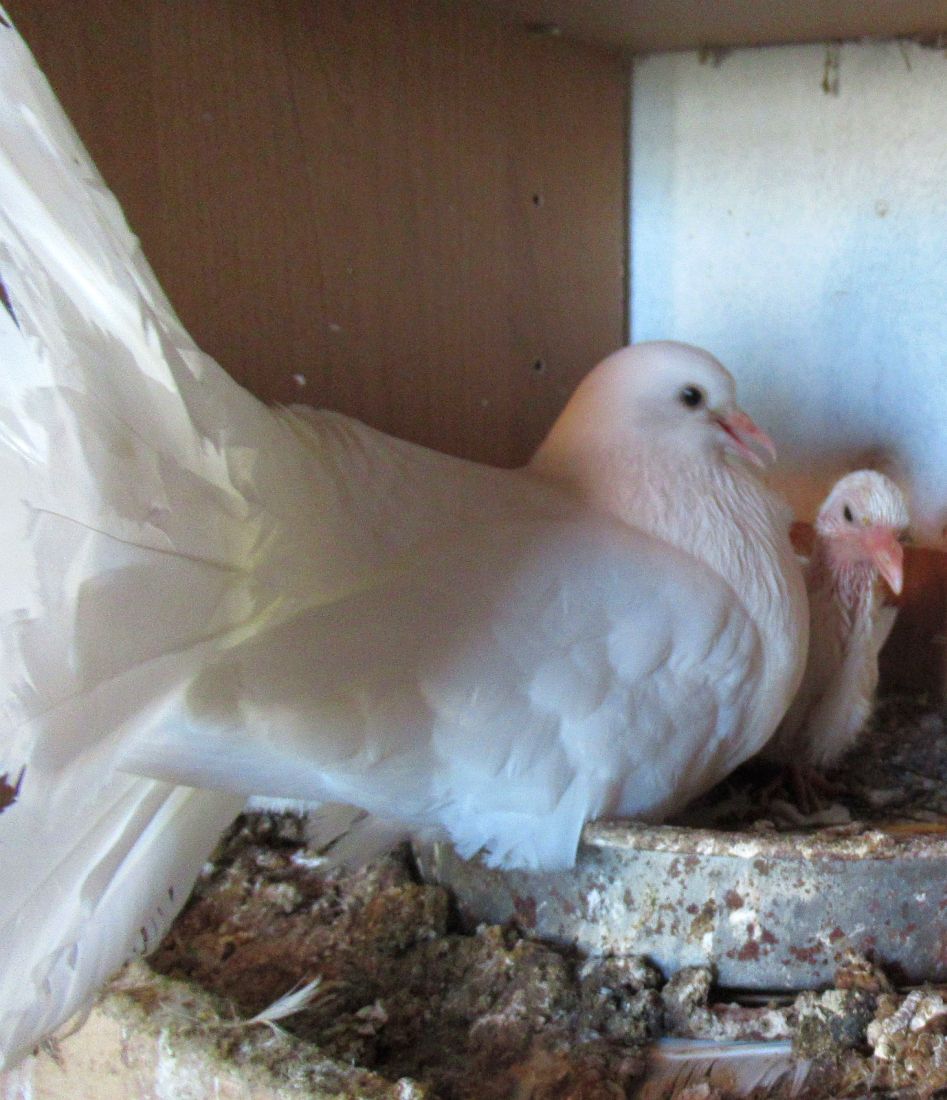
I was wrong when I said there had been no baby fantail pigeons to survive. I found this youngster in a nest on a shelf:
Hello, little one. Welcome to the world:
And then my neighbor and his uncle came to bale the hay. The baler has a kicker which tosses each finished bale up into the hay wagon as it is finished:
The uncle's job was to catch each bale and stack it neatly:
Being an old hand at this, he was usually able to direct each bale toward its final resting place, thereby saving himself from needless work and possible injury:
The hay dust was so thick that I itched and coughed for a day after taking these photos. I only got half of the field cut and baled, and the field produced less than expected, so there is much more haying to be done:
And the next morning, the purple Iris began to bloom:
They are indeed a flower of exquisite beauty:
The Bridalveil Spirea also bloomed:
Their tiny flowers are produced in such abundance that they are amazing:
They are also pretty, so I put some branches in a vase with those from the Snowball Bushes and brought them to church. I gave the flowers to a woman from choir when church was over:
I was wrong when I said there had been no baby fantail pigeons to survive. I found this youngster in a nest on a shelf:
Hello, little one. Welcome to the world:
And then my neighbor and his uncle came to bale the hay. The baler has a kicker which tosses each finished bale up into the hay wagon as it is finished:
The uncle's job was to catch each bale and stack it neatly:
Being an old hand at this, he was usually able to direct each bale toward its final resting place, thereby saving himself from needless work and possible injury:
The hay dust was so thick that I itched and coughed for a day after taking these photos. I only got half of the field cut and baled, and the field produced less than expected, so there is much more haying to be done:
And the next morning, the purple Iris began to bloom:
They are indeed a flower of exquisite beauty:
The Bridalveil Spirea also bloomed:
Their tiny flowers are produced in such abundance that they are amazing:
They are also pretty, so I put some branches in a vase with those from the Snowball Bushes and brought them to church. I gave the flowers to a woman from choir when church was over:
Labels:
Fantail pigeons,
hay baler,
hay tedding,
hay wagon,
Iris,
kicker,
north field,
Snowball Bush,
Spirea
Thursday, February 7, 2019
A Snowy Farm - Part 1
It was cold and snowy outside, and I could see through a window that this tree was covered in white. It's a double tree - a wild seeded Golden Delicious apple on the left, and a flowering crab on the right:
So I bundled up and went outside for a closer look at all the wintry beauty. The Golden Delicious in the above photo still had apples clinging to its frozen branches:
I looked across the county road to the northwest and my neighbors' house:
Then I turned my gaze toward the north field, which was across the gravel town road:
Due west was my neighbors' barn:
And to the southwest was the farm field on which alternating crops of soybeans and field corn are grown and harvested:
The cattle and horses were clustered at the bale feeder on the east side of the barn:
And the trees at the edge of the field to the northeast were beautifully covered in snowy white:
For a closeup view, I checked out the Rugosa Rose hips, growing right near the farm house back door:
All five dogs were watching me from their fenced yard:
The Bridalveil Spirea bushes were intricate and lacy, all covered with snow. I continued walking, and will post Part 2 tomorrow:
So I bundled up and went outside for a closer look at all the wintry beauty. The Golden Delicious in the above photo still had apples clinging to its frozen branches:
I looked across the county road to the northwest and my neighbors' house:
Then I turned my gaze toward the north field, which was across the gravel town road:
Due west was my neighbors' barn:
And to the southwest was the farm field on which alternating crops of soybeans and field corn are grown and harvested:
The cattle and horses were clustered at the bale feeder on the east side of the barn:
And the trees at the edge of the field to the northeast were beautifully covered in snowy white:
For a closeup view, I checked out the Rugosa Rose hips, growing right near the farm house back door:
All five dogs were watching me from their fenced yard:
The Bridalveil Spirea bushes were intricate and lacy, all covered with snow. I continued walking, and will post Part 2 tomorrow:
Labels:
apple tree,
back yard,
barn,
cattle,
farm,
farm field,
Flowering Crab,
Happy dogs,
horses,
north field,
Rugosa Roses,
Spirea,
winter beauty
Wednesday, December 5, 2018
What The Thaw Revealed
After an early, snowy and frigid beginning to winter, we had a surprise thaw, so I went out to see what the snow melt had revealed. This is my Blue Moon Wisteria. It's not much taller than when I planted it, but it's sturdier and has already survived one harsh winter, so I have high hopes for more growth this summer:
The pear tree produced so much fruit that branches began snapping off and falling to the ground. Even after letting the neighbors take all the pears they wanted, there were still plenty of them on the ground:
And I could tell that the cottontails had been eating them. I see their tracks each morning when there's snow on the ground and sometimes I see them scurry away when I turn on the back porch light at night:
There were windfall apples too:
I thought the Coppertina Ninebark bushes were unchanged by winter's cold - until, that is, I got a closer look. The leaves were dry and dead, despite retaining much of their coppery color:
The Iris and Asiatic Lilies (and all their little weed friends) were asleep for the winter:
And, on the other side of the house from the main apple grove, the Golden Delicious tree had dropped fruit. I could see that the rabbits had been eating them also:
The Variegated Weigela and Magic Carpet Spirea looked dead, but they are hardy enough for me not to worry about them:
The peonies had lain down for a long winter's nap:
But the Tree Hydrangea will keep its dried flowers all winter long:
The Mandarin Honeysuckle is in its first winter here. The last one I planted didn't make it through its first winter, but this one grew much better - and they are reportedly Zone 3 hardy:
The Red Hydrangea and hardy Magnolia were dormant, and I could only hope they will survive this winter. This is the Magnolia's third winter here but, as you can see, it hasn't grown very tall in three years:
My biggest surprise was the Morden roses. When they told me they were super hardy, I guess they weren't kidding. They still looked like they'd bloom again if we got some warmer weather:
The Rose Mallows were done for the year. I'll cut them down to the ground in the spring:
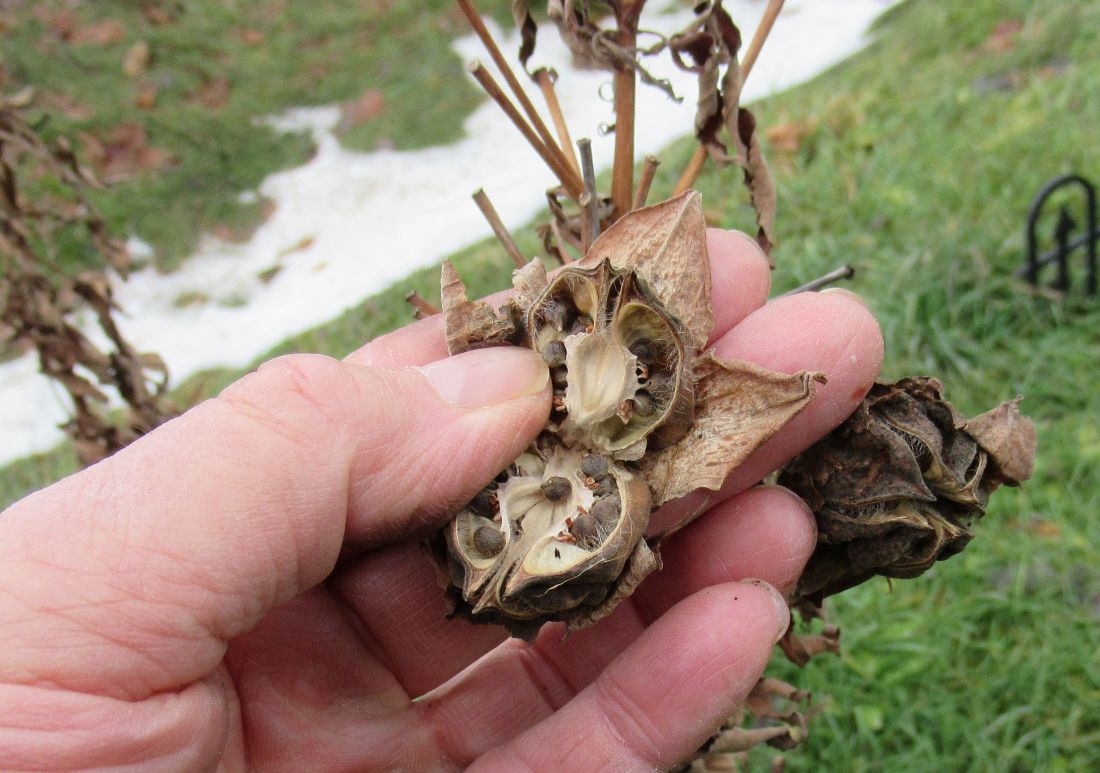
But the Rose Mallows had a surprise for me - pods filled with seeds. I tried planting some last year without success, but I saved these seeds and plan to try again in the spring:
Another surprise, an Eastern White Cedar seedling growing in an ancient tree stump beneath the big clump of Lilacs. Alas, I won't be able to let it grow there because of the Lilacs:
And speaking of Lilacs, they too had seed pods, not to mention green buds, all ready to burst open in the spring. Our surprise thaw was short lived. It's now fully winter again:
The pear tree produced so much fruit that branches began snapping off and falling to the ground. Even after letting the neighbors take all the pears they wanted, there were still plenty of them on the ground:
And I could tell that the cottontails had been eating them. I see their tracks each morning when there's snow on the ground and sometimes I see them scurry away when I turn on the back porch light at night:
There were windfall apples too:
I thought the Coppertina Ninebark bushes were unchanged by winter's cold - until, that is, I got a closer look. The leaves were dry and dead, despite retaining much of their coppery color:
The Iris and Asiatic Lilies (and all their little weed friends) were asleep for the winter:
And, on the other side of the house from the main apple grove, the Golden Delicious tree had dropped fruit. I could see that the rabbits had been eating them also:
The Variegated Weigela and Magic Carpet Spirea looked dead, but they are hardy enough for me not to worry about them:
The peonies had lain down for a long winter's nap:
But the Tree Hydrangea will keep its dried flowers all winter long:
The Mandarin Honeysuckle is in its first winter here. The last one I planted didn't make it through its first winter, but this one grew much better - and they are reportedly Zone 3 hardy:
The Red Hydrangea and hardy Magnolia were dormant, and I could only hope they will survive this winter. This is the Magnolia's third winter here but, as you can see, it hasn't grown very tall in three years:
My biggest surprise was the Morden roses. When they told me they were super hardy, I guess they weren't kidding. They still looked like they'd bloom again if we got some warmer weather:
The Rose Mallows were done for the year. I'll cut them down to the ground in the spring:
But the Rose Mallows had a surprise for me - pods filled with seeds. I tried planting some last year without success, but I saved these seeds and plan to try again in the spring:
Another surprise, an Eastern White Cedar seedling growing in an ancient tree stump beneath the big clump of Lilacs. Alas, I won't be able to let it grow there because of the Lilacs:
And speaking of Lilacs, they too had seed pods, not to mention green buds, all ready to burst open in the spring. Our surprise thaw was short lived. It's now fully winter again:
Subscribe to:
Posts (Atom)