I was touring the Akwesasne Cultural Center Museum in Hogansburg, New York (see also previous two posts) and came to these cornhusk ironworker dolls, a tribute to the long-standing tradition of structural steel or ironwork. Over 300 Akwesasne Mohawks are members in Local 440 even today:
A water drum. I believe that different amounts of water are placed inside to add tone and pitch to the drumbeat. I own a clay water drum, made in Mexico, and I assume this worked similarly:
Ancient pottery and modern pottery:
Moccasins with porcupine quillwork:
Antler carvings of the Three Sisters: Bean Spirit, Squash Spirit and Corn Spirit:
A beaded bracelet:
Deerskin:
The Iroquois headdress was made of a wood splint frame, wrapped in leather. Each of the six nations had a distinctive headdress, adorned with silver and brass bands, cloth, beads, quahog shells and turkey, hawk or partridge feathers. Eagle feathers appeared at the top of each one and a chief's headdress also included deer antlers. I got a photo of all six nations. This was Seneca:
Mohawk:
Oneida:
Onondaga:
Cayuga:
Tuscarora:
Showing posts with label Akwesasne Mohawk Community. Show all posts
Thursday, February 4, 2016
Monday, July 20, 2015
Six Nations Indian Museum - Part 2
I continued my tour of the Six Nations Indian Museum, where an amazing collection of artifacts bedazzled me. They had items from all six nations of the Iroquois Federation (and more), all crowded in together. There was too much to absorb in one trip:
An eagle claw necklace, a beaded belt and the head of a cane:
A close-up of the beaded sash. The sign said that the sash tells, in pictographic symbols, the lessons of the great Seneca teacher and prophet, Kaniatario:
More of the Condolence Cane, whose antlered head was seen in a previous photo:
A beaded belt, part of a charge to a group of young cousins to keep the council fire clean and respectable, to sweep it with a seagull's wing:
Prehistoric stone celts. A celt was a stone tool, similar to an adze, hoe or axe:
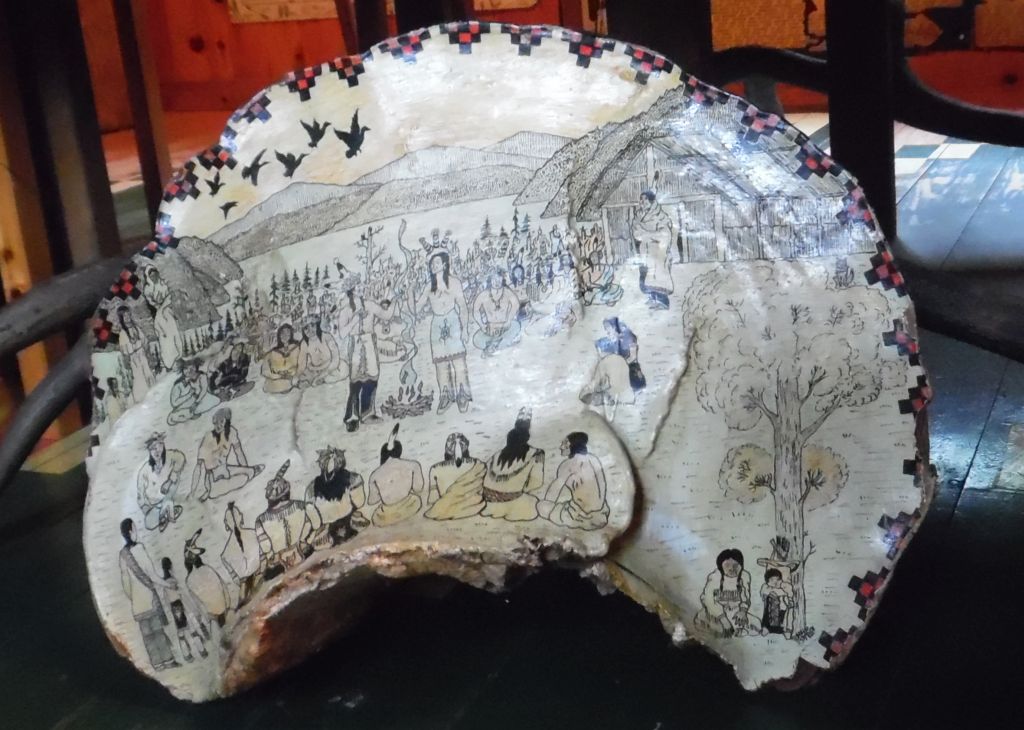
Amazing artwork on a very large shelf fungus:
A Cree necklace with a blue Mohawk neck ornament, showing a beaded bear head, announcing that the wearer was a member of the bear clan:
Another Mohawk neck piece, this one with a turtle clan symbol, representing the earth, and the tree of peace, representing the Iroquois Confederacy:
A highly ornamented, beaded, Oneida Tribal belt:
A reproduction of the original belt awarded to William Penn in celebration of a peace treaty:
A model of an Iroquois bark house. They were structured with cedar and other woods, and then covered with elm bark. 80 to 120 feet long, they were a home for an extended family, a matrilineal clan:
An eagle claw necklace, a beaded belt and the head of a cane:
A close-up of the beaded sash. The sign said that the sash tells, in pictographic symbols, the lessons of the great Seneca teacher and prophet, Kaniatario:
More of the Condolence Cane, whose antlered head was seen in a previous photo:
A beaded belt, part of a charge to a group of young cousins to keep the council fire clean and respectable, to sweep it with a seagull's wing:
Prehistoric stone celts. A celt was a stone tool, similar to an adze, hoe or axe:
Amazing artwork on a very large shelf fungus:
A Cree necklace with a blue Mohawk neck ornament, showing a beaded bear head, announcing that the wearer was a member of the bear clan:
Another Mohawk neck piece, this one with a turtle clan symbol, representing the earth, and the tree of peace, representing the Iroquois Confederacy:
A highly ornamented, beaded, Oneida Tribal belt:
A reproduction of the original belt awarded to William Penn in celebration of a peace treaty:
A model of an Iroquois bark house. They were structured with cedar and other woods, and then covered with elm bark. 80 to 120 feet long, they were a home for an extended family, a matrilineal clan:
Sunday, July 19, 2015
Six Nations Indian Museum - Part 1
It's open only in the summer, so I'd been waiting all winter to visit the Six Nations Indian Museum. One day I drove an hour southeast of home and, deep in the Adirondack forest, found the museum in the tiny settlement of Onchiota:
I walked up the ramp, paid $5.00 and began my tour:
Inside, a handsome young Mohawk introduced himself and offered to answer any questions I might have. I didn't know what to ask, but he did tell me a lot about the museum. He grew up in Onchiota, as this land and building used to be a summer camp, run by his grandfather. Now it's a museum and he lives on Cornwall Island, part of the Akwesasne Mohawk reserve up near Massena, except for the three months the museum is open:
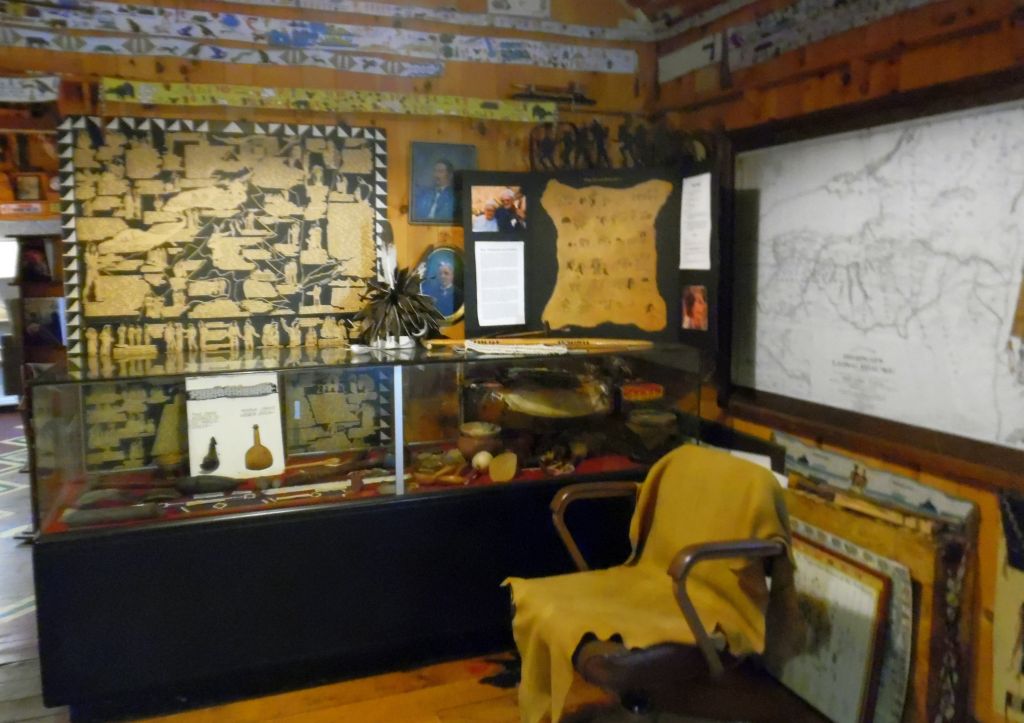
I began my tour, totally amazed by the wealth of materials and artifacts they had displayed. It was very difficult to photograph because of the lighting and reflections off the glass fronted cabinets. But that may be a blessing, as otherwise I might be posting pictures from this one place for a month or more. Even with all the photos which I had to discard, there are three posts:
Beaded moccasins - many of them, too many to show them all:
And speaking of beadwork, click on this to enlarge - and be amazed:
Many of the items which had dates were from the late 1800s, but most were not dated:
A cradle board and blanket, seemingly for use together:
Lacrosse sticks from many tribes:
Mohawk baskets. The nearby Akwesasne community is noted for its fine basketry:
A close-up of a Mohawk basket:
And many more, some fancier than others. But I'd just begun my tour of the Six Nations Indian Museum. I'll post Part 2 tomorrow:
I walked up the ramp, paid $5.00 and began my tour:
Inside, a handsome young Mohawk introduced himself and offered to answer any questions I might have. I didn't know what to ask, but he did tell me a lot about the museum. He grew up in Onchiota, as this land and building used to be a summer camp, run by his grandfather. Now it's a museum and he lives on Cornwall Island, part of the Akwesasne Mohawk reserve up near Massena, except for the three months the museum is open:
I began my tour, totally amazed by the wealth of materials and artifacts they had displayed. It was very difficult to photograph because of the lighting and reflections off the glass fronted cabinets. But that may be a blessing, as otherwise I might be posting pictures from this one place for a month or more. Even with all the photos which I had to discard, there are three posts:
Beaded moccasins - many of them, too many to show them all:
And speaking of beadwork, click on this to enlarge - and be amazed:
Many of the items which had dates were from the late 1800s, but most were not dated:
A cradle board and blanket, seemingly for use together:
Lacrosse sticks from many tribes:
Mohawk baskets. The nearby Akwesasne community is noted for its fine basketry:
A close-up of a Mohawk basket:
And many more, some fancier than others. But I'd just begun my tour of the Six Nations Indian Museum. I'll post Part 2 tomorrow:
Subscribe to:
Posts (Atom)