Showing posts with label Wilber's Hardware. Show all posts

Tuesday, August 7, 2018

Hopkinton NY Field Days - Part 1

If you are driving along Route 11B and pass this shady town green, you may stop and have a picnic there. It's an inviting place indeed, and where I parked in order to watch the 2018 Hopkinton Field Days Parade. The big sign on the left announces the town's 200th anniversary. Unfortunately, that was in 2002, so it's time to replace it. The smaller sign commemorates the raid of 1814, when British troops seized 300 barrels of flour which were stored in the barns of Col. Hopkins:

I walked across the highway and found a comfortable lawn with shade. From there I could see Wilber's Hardware Store, a handy place to find nearly anything you need when something breaks:

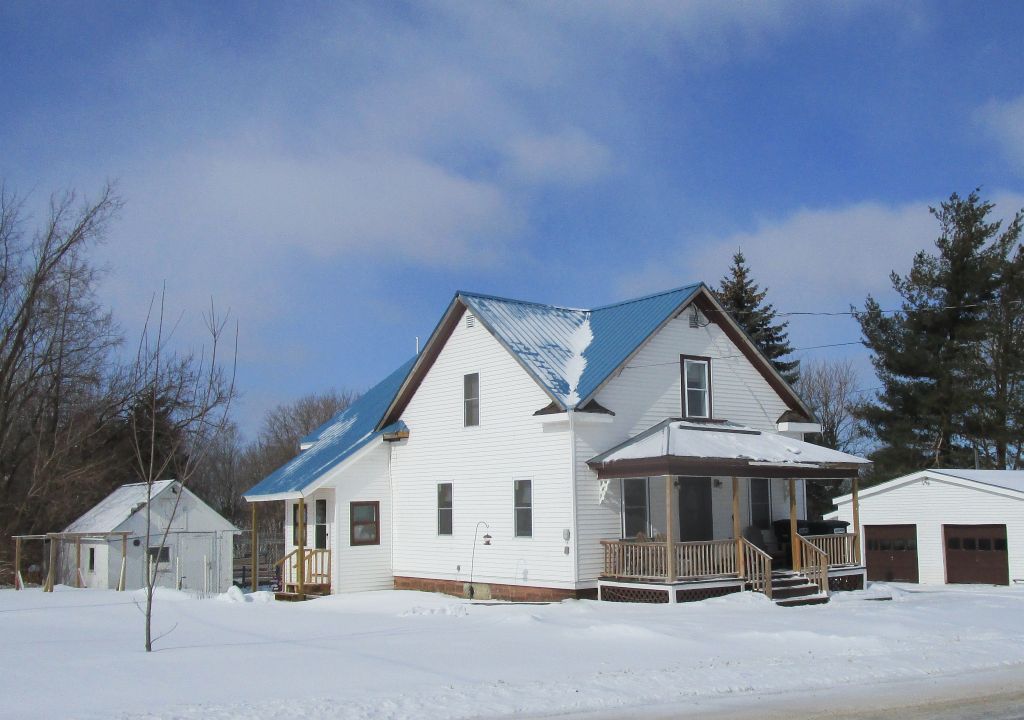
And a historic house, one of the original homes from the early settlers. Of course it's been updated in the years since:


And then the parade began with the American Legion:

They were followed by fire trucks and ambulances from many surrounding towns and hamlets. The first was from Hopkinton itself (Fort Jackson is part of Hopkinton):

Parishville, NY:

And this was a mystery. I think the sign read, "I'm the future dentist." I don't know what it meant either:

And then the fire trucks continued, this one from Nicholville:

And from Morley:

And this float, a taste of chilly winter on that hot day. Their tee shirts said "Polar Blast" and they were passing out bottles of cold water:

And the fire trucks continued. This one was from North Lawrence, home of the yogurt factory:

And from Lawrenceville. There were sure a lot of fire trucks, but I deemed that a good thing, a sign that all the local communities supported each other. I'll post Part 2 tomorrow:

Thursday, August 24, 2017

Hopkinton, New York Summer Parade - Part 1

The tiny, rural town of Hopkinton, New York discontinued many of its Summer Festival events this year but the parade went on as usual. It is a short parade route but very popular. I took up a spot across from Wilber's Hardware Store as the VFW contingent marched by:

And then the firetrucks began. They were, in fact, the main part of the parade. There were trucks from Hopkinton, Fort Jackson, Norwood, Russell, North Lawrence, Lawrenceville, Parishville, Dickinson, Nicholville and the Tri-Town Coalition. How's that for area representation?:

The Tri-Town Coalition includes Stockholm, Brasher and Lawrence. They had their Summer Festival Parade the previous week:

Firetrucks galore!

Russell may have been the farthest town from Hopkinton to send a firetruck. It's still in St. Lawrence County, but then again, St. Lawrence County is the largest in New York State:

Parishville, just south of Hopkinton. The two towns share a high school:

A business/political parade entry. There is a push to get a windmill farm in the town of Hopkinton, but it is controversial:

The float in favor of windmills was mostly children, one of whom was playing the saxophone:

And several politicians were there, hoping to get their names recognized before the next election. I don't think this was the politician himself, but a local supporter:

This was a fun entry, though I never figured out what kind of group they were until I got home and Googled it. They are a dance group with local chapters all over. They sure seemed to have fun:

And they had elegant, elaborate costumes:

The Monarch Butterfly lady was especially colorful. There were more paraders, though, and I'll post Part 2 tomorrow:

Friday, April 8, 2016

Town Of Hopkinton Historical Tour - Part 1

The first recorded settlers arrived in what is now Hopkinton, New York around 1802. The town was first organized in 1805 and is one of the original ten towns of St. Lawrence County. In February 1814 (during the War Of 1812), the British troops raided Hopkinton, seizing 300 barrels of flour which were stored for the U.S. Government in the barn of Col. Hopkins, for whom the town was later named. This tour of historic places in the town was written and printed by Mary Converse, Hopkinton Town Historian, and I followed the booklet to the sites and used her descriptions in my captions for the photos. Many of the buildings had been modernized, some were abandoned, but all had interesting historical notes:

The Hopkinton Village School. Now the fire station, the original part of this building was built in 1869 at a cost of $3500 and was used for grades one through six until 1952. In 1954 it was purchased  by the Hopkinton-Ft. Jackson Fire Department and Ladies' Auxiliary:

This house has long been an important part of the town. Dr. James Q. Flood had his office in the room off the kitchen with a separate entrance on the right back corner. In the same room, Marion Hopkins had her church meetings and parties. Edith Regan had the Post Office in this room from 1945 to 1946. Erwin Zahler had the Town Justice offices there for twenty years and his wife, Margaret, had the Town Clerk's offices there for four years. Margaret still lives in this house:

King S. Chittenden had this house built by the Brush brothers around 1865. Jason Brush was married to King's sister, Olivia. King and his brother, Varick, were co-owner's of Chittenden's Store after their father retired:

The Clark S. Chittenden home was built in 1840. He was the founder of Chittenden's Store, Town Supervisor for seven years and was a member of the State Legislature. The Chittenden family has been been in Hopkinton for 181 years but no longer lives in this house:


The former Chittenden's Store, mentioned several times above, has been an active business in Hopkinton since 1821. The current building was built in 1927 after the original store was destroyed by fire. The store was restored by Jerome Wilber who currently operates it as a hardware store:

Murphy's Inn, directly across the road from Chittenden's Store, was originally used for a wheelwright, cabinet and shoe shop, store and school house. Mr. Howe remodeled the building into a Hotel. Cornelius Murphy bought it and it was called Murphy's Inn for many years. It was a stage coach stop for the Port Kent to Hopkinton coach run. It is now a private residence:

This home was built by Thaddeus Laughlin in 1814 and operated as a hotel for many years. The front west (right side) room was used as a bar room. At one time there was a fireplace with a swinging crane, bake oven and boiler arch in this house. Thaddeus and his father, Henry Laughlin, came from Bristol, Vt. in 1804 and built a log hotel nearby. Thaddeus Laughlin was appointed Hopkinton's first Postmaster in 1808 and served for several years as Town Supervisor:

The Hopkinton Village Green is on land given to the town in 1808 by Roswell Hopkins. The deed reads that the land is "for the inhabitants of the town, to be used for public green and for no other use whatever." The Hopkinton Village Green is on the National Register of Historic Places:

The Hopkinton Town Hall was erected in 1870 at a cost of $4,093.12, replacing the Old Stone Schoolhouse, Hopkinton's first public building built on this same site in 1815. It was remodeled in 1958. The Hopkinton Town Hall is on the National Register of Historic Places:

The Congregational Church, founded in 1808, was originally called the Church of Christ of Hopkinton. The first church building was built in 1828 and burned in 1891. The present building was built in 1892 at a cost of $6000. The Congregational Church is on the National Register of Historic Places:

The Hopkinton Historical Group Museum. The back part of this house was built in 1817 by Samuel Wilson and now houses the Town Library. The front part of the house was built 1838-1839 by Zoraster Culver. Both Mr. Wilson and Mr. Culver kept stores at this location. The building was purchased in 1985 to be used as a museum:

The Sprague house. Dr. Sprague came to town in 1811 and was the second physician to settle here. He acquired this lot in 1814 and either built or moved into this house in that year. He remained in Hopkinton until his death in 1859. Some of the flour seized by the British in the raid of 1814 was stored in a barn which stood on this property:

The Goodnow house was built between 1822 and 1834 by Bushnell Moore, who also built the first tannery in Hopkinton, where Nathaniel Goodnow learned the trade of tannery. The original burying ground of the pioneers was located behind this house and the house next door. The graves were later moved to the present Hopkinton-Ft. Jackson Cemetery during the 1840s:

Sunday, March 13, 2016

County Route 49 - Part 1

It was a cold but clear day and I'd just put a pork tenderloin, carrots and red potatoes in the oven to cook. I decided to make a quick driving tour, but it had to be nearby. I had an hour and twenty minutes, so I drove to the town center of Hopkinton and began at Wilber's Hardware at the corner of county Route 49:

I circled around the village square to photograph the Hopkinton Town Museum:

And the Congregational Church:

And the Hopkinton Town Court House:

Then I began driving northwest on County Route 49:

The houses were town style at first, though I suppose any or all of them might have begun life as farm houses:

The Town Highway Garage and other facilities were on Route 49, and I believe this building was one of theirs:

I passed by the narrow strip of the Hopkinton-Fort Jackson Cemetery:

And an old farm house with an Amish buggy and wagon parked beside it:

This barn sat right on the banks of the St. Regis River and had a marvelous, square wooden silo:

This old farm house still had an old barn in good shape, though it appeared to be used only as a garage these days:

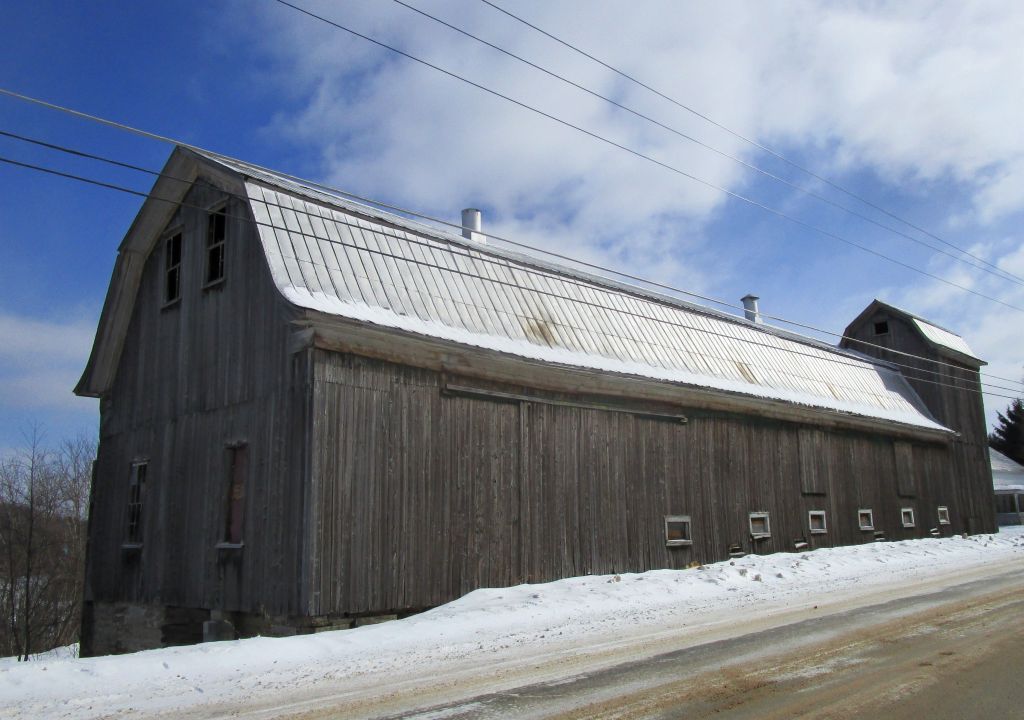
The walls of this old barn seemed to be collapsing from the outside in, truly a shame for I could tell it was a real beauty once upon a time. But I was just getting started. Tune in tomorrow for Part 2:

Monday, August 6, 2012

Historic, Rural Hopkinton, New York - Part 1

I'd arrived at the farm about 2:00 on a Sunday afternoon, got the dogs settled and comfortable, and then taken a tour of the Hopkinton town museum (see previous posts). It was then about 3:30 and I decided to get some photos of the town of Hopkinton - as the sign says, "A nice place to come home to."

Directly across the road from the village green and the museum was this wood shingled home with its colorful display of old fashioned Day Lilies:

And an old farm house on the windswept plain:

A friendly family residence with more Day Lilies:

A cheerful blue home:

And Lamphere's convenience store on Route 11B, the town's primary place to meet and greet one's neighbors. It used to be called Greg And Molly's, but they apparently grew weary of the long hours and sold the business:

There are lots of family farms in Hopkinton, both large and small:

This, I believe, would qualify as one of the larger farms:

A home beneath a tall Spruce with a view of Canada from its back yard:

And the Holy Cross Roman Catholic church:

Miller Farms Adirondack Harvest which, in contrast to to its title and vegetable signs, seems to primarily sell ornamental perennials:

And, of course, Wilber's Hardware Store, that venerable purveyor of nearly everything you might need to keep your home and farm running. But I was just getting warmed up in my driving tour. I'll post more tomorrow: